

Understanding the Purpose of Bong Accessories for Cannabis Use
Bong accessories are more than just flashy add-ons for your favorite water pipe. Some can actually change the way you smoke, with certain filtration accessories shown in studies to noticeably reduce harmful particulates in each hit. Most people assume these pieces are just for style or convenience. The truth is they are engineered tools that can make every session smoother, cooler, and healthier than you ever expected.
Table of Contents
- What Are Bong Accessories And Their Roles?
- Why Bong Accessories Matter In Cannabis Consumption
- How Bong Accessories Enhance The Smoking Experience
- Key Types Of Bong Accessories And Their Functions
Quick Summary
| Takeaway | Explanation |
|---|---|
| Choose the Right Accessories | Proper accessory selection enhances filtration, temperature, and comfort during smoking sessions. |
| Filtration Improves Health | Accessories like percolators reduce harmful particulates, leading to cleaner inhalation and reduced respiratory risks. |
| Customization Enhances Experience | Users can personalize their smoking setups to optimize factors like smoke density and temperature control. |
| Regular Maintenance is Key | Using ash catchers helps keep equipment clean and maintains the quality of each smoking session. |
| Technical Performance Matters | Advanced accessories enhance smoke quality, flavor preservation, and overall inhalation smoothness. |
What are Bong Accessories and Their Roles?
Bong accessories represent specialized components designed to enhance and customize the cannabis smoking experience, transforming standard water pipes into personalized smoking devices. These meticulously crafted add-ons serve multiple functional purposes, ranging from improving smoke quality to ensuring equipment maintenance and user convenience.
Understanding Core Accessory Functions
Bong accessories fundamentally work to modify and optimize the smoking process. Scientific research on cannabis consumption methods indicates that strategic accessory selection can dramatically impact smoke filtration, temperature, and overall inhalation experience. Key functional categories include:
- Filtration Enhancers: Components like percolators and ash catchers that remove particulates and cool smoke
- Structural Modifications: Replacement parts such as downstems and bowls that improve structural integrity
- Comfort Optimization: Accessories like ice catchers and splash guards that make inhalation smoother
Performance and Customization Aspects
Each bong accessory serves a precise engineering purpose.
Percolators, for instance, create additional water filtration points, breaking smoke into smaller bubbles that increase surface area contact and cool the inhaled vapor. Ash catchers prevent residue buildup in the main chamber, maintaining cleaner equipment and providing a more pleasant smoking experience.
Users can read more about comprehensive bong setups to understand how these accessories interact and enhance overall smoking performance. The right combination of accessories can transform a basic water pipe into a sophisticated smoking instrument, tailored to individual preferences and consumption styles.
Why Bong Accessories Matter in Cannabis Consumption
Bong accessories are not merely aesthetic additions but critical components that significantly transform the cannabis consumption experience. These specialized tools provide practical solutions to enhance user safety, comfort, and overall smoking quality by addressing fundamental challenges in smoke inhalation and equipment performance.
Health and Smoke Quality Optimization
Scientific research on cannabis consumption demonstrates that strategic accessory selection can substantially reduce potential respiratory risks. Advanced filtration accessories work to mitigate harmful particulate matter, providing users with a cleaner and potentially less irritating inhalation experience. Key health-related benefits include:
- Smoke Cooling: Reducing thermal irritation through percolators and ice catchers
- Particulate Filtration: Removing potentially harmful microscopic particles
- Moisture Regulation: Preventing harsh, dry smoke inhalation
Performance Enhancement and User Experience
Bong accessories directly impact the technical quality of cannabis consumption. Precision-engineered components like diffusers, ash catchers, and advanced downstems transform basic water pipes into sophisticated smoking instruments. These accessories enable users to customize their experience, controlling factors such as smoke density, temperature, and smoothness.
Interested users can learn more about advanced smoking techniques to understand the intricate relationships between different accessories and their performance implications. By selecting appropriate accessories, cannabis consumers can create a more personalized, efficient, and enjoyable smoking setup that aligns with individual preferences and consumption styles.
How Bong Accessories Enhance the Smoking Experience
Bong accessories represent an intricate ecosystem of specialized components designed to elevate cannabis consumption beyond basic smoking methods. These meticulously engineered tools transform standard water pipes into personalized smoking systems that optimize every aspect of the inhalation experience.
Sensory and Technical Performance Improvements
Research on cannabis consumption methods demonstrates that strategic accessory selection can dramatically enhance user experience through precise mechanical interventions. Advanced accessories work synergistically to modify fundamental smoking characteristics, providing users with unprecedented control over their consumption process. Key performance enhancements include:
- Temperature Regulation: Controlling smoke heat for smoother inhalation
- Filtration Precision: Reducing particulate matter and potential respiratory irritants
- Flavor Preservation: Maintaining cannabis terpene profiles during consumption
Customization and Personal Comfort
Each bong accessory serves as a precision instrument that allows consumers to fine-tune their smoking experience. Percolators break smoke into smaller bubbles, increasing surface area and cooling potential. Ash catchers prevent residue buildup, maintaining cleaner equipment and delivering more consistent performance. Splash guards eliminate water transfer, ensuring a more comfortable inhalation process.
Users interested in exploring comprehensive smoking accessories can discover how these intricate components work together to create a tailored, high-quality cannabis consumption experience. By understanding and selecting appropriate accessories, consumers can transform a basic smoking session into a refined, personalized ritual that prioritizes both enjoyment and technical excellence.
To help readers understand the differences and purposes of common bong accessories, the table below compares key types, their primary functions, and the main user benefits.
| Accessory Type | Primary Function | User Benefit |
|---|---|---|
| Percolator | Breaks smoke into small bubbles for extra filtration | Cooler, cleaner, and smoother inhalation |
| Ash Catcher | Captures debris and ash before it enters the bong | Cleaner bong, less frequent maintenance |
| Diffuser | Disperses smoke for enhanced water filtration | Reduces harshness, smooths each hit |
| Ice Catcher | Holds ice cubes above the water chamber | Significantly cools smoke for comfort |
| Downstem | Connects bowl to water chamber for optimal smoke flow | Improved structural integrity and airflow |
| Splash Guard | Prevents water from reaching the mouthpiece | Increases comfort, keeps hits dry |
| Bowl | Holds cannabis material for burning | Controls dose and burn efficiency |
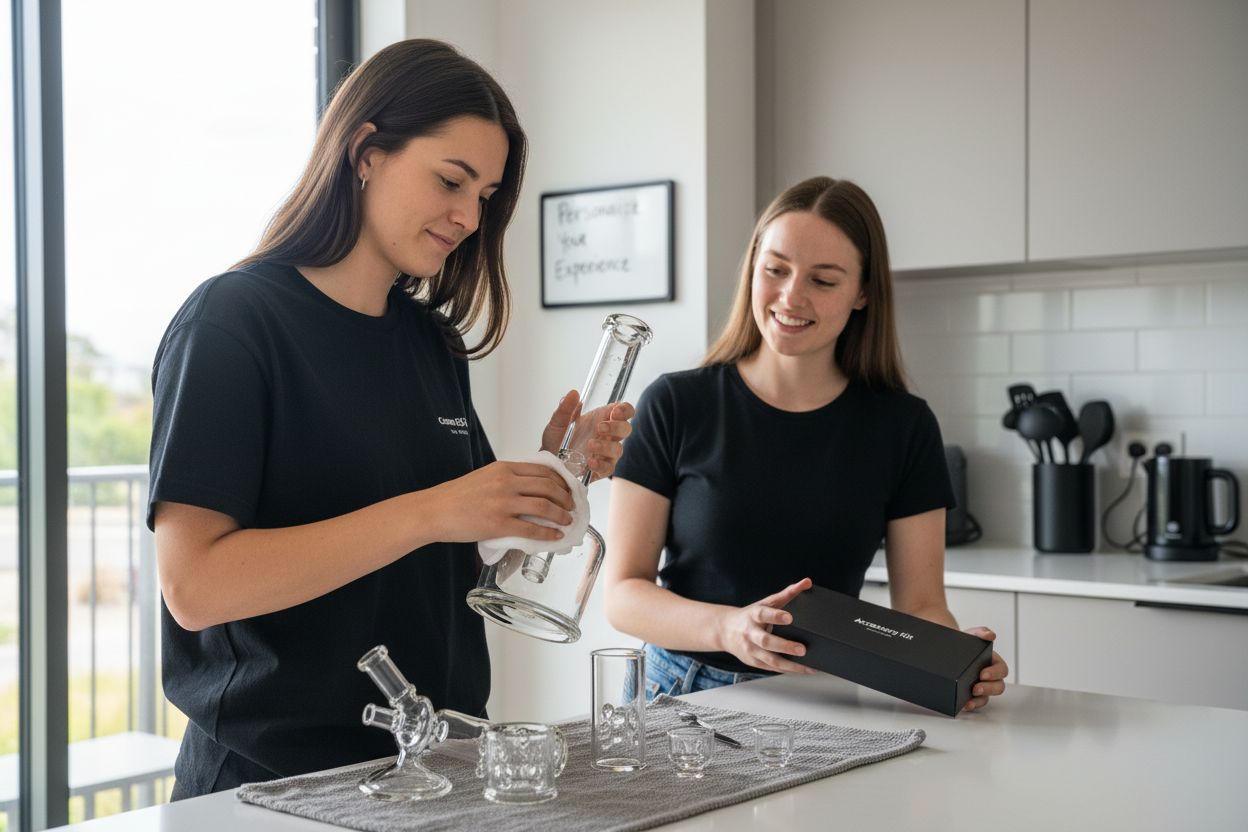
Key Types of Bong Accessories and Their Functions
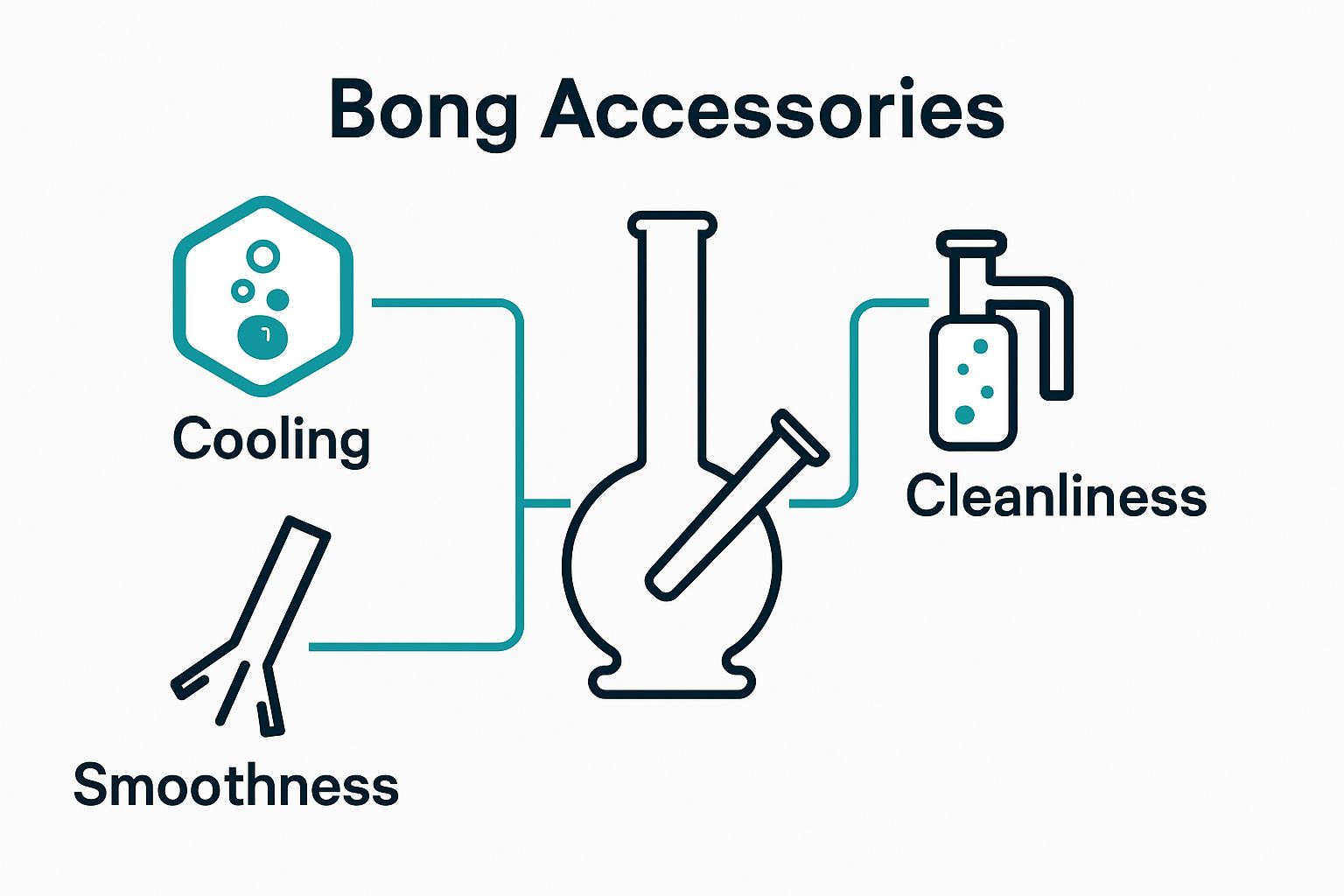
Bong accessories comprise a sophisticated ecosystem of specialized components designed to enhance and personalize cannabis consumption. These meticulously engineered tools provide users with unprecedented control over their smoking experience, transforming standard water pipes into precision instruments of inhalation.
Filtration and Smoke Modification Accessories
Scientific research on smoke dynamics reveals the critical role specialized accessories play in modifying smoke quality. Advanced accessories work to deconstruct and refine the smoking process, offering users multiple layers of technical intervention. Key filtration components include:
- Percolators: Breaking smoke into smaller bubbles for increased cooling and filtration
- Ash Catchers: Preventing residue buildup and maintaining clean smoking equipment
- Diffusers: Spreading smoke through water to maximize surface area contact
Structural and Performance Enhancement Accessories
Beyond basic filtration, bong accessories serve complex functional purposes. Downstems create critical water chamber connections, while bowl variations control substance volume and burning characteristics. Ice catchers introduce additional cooling mechanisms, allowing users to dramatically reduce smoke temperature before inhalation.
Users interested in exploring advanced smoking configurations can discover how these intricate components transform basic smoking equipment into highly personalized consumption systems. By understanding each accessory’s unique contribution, consumers can craft a smoking experience that precisely matches their preferences for temperature, smoothness, and overall sensory quality.
Below is a table categorizing bong accessories by their core functions, giving readers a quick reference for how each accessory impacts their cannabis smoking experience.
| Category | Example Accessories | Core Function |
|---|---|---|
| Filtration and Smoke Modification | Percolators, Ash Catchers | Refine, filter, and cool smoke |
| Structure and Performance | Downstems, Bowls | Support airflow and combustion efficiency |
| Comfort and Customization | Ice Catchers, Splash Guards | Enhance personal comfort and session style |
| Maintenance | Ash Catchers, Bowls | Keep bong clean and reduce residue |
| Sensory Enhancement | Diffusers, Percolators | Preserve flavor and improve smoothness |
Take Control of Your Cannabis Experience with the Right Bong Accessories
If you feel limited by harsh hits, difficult maintenance, or uninspiring smoke sessions, you are not alone. The article revealed how finely tuned bong accessories like percolators, ash catchers, and diffusers can solve these common problems and elevate both comfort and performance. You deserve smoother smoke, better filtration, and a setup that truly fits your style. The right accessory choices are the difference between a basic water pipe and a personalized, high-quality ritual.

Ready to upgrade your bong with industry-leading parts? Explore It’s 4:20 Somewhere for one of Canada’s most complete selections of premium bong accessories. Whether you want to browse glass stems and premium bowls or discover how a true all-in-one water pipe and kit can refine your experience, the solutions are just a click away. Shop now for exclusive deals and see how effortless it can be to build your perfect smoke session—because your best cannabis experience starts with the right gear.
Frequently Asked Questions
What are the primary functions of bong accessories?
Bong accessories primarily enhance the cannabis smoking experience by improving smoke quality and ensuring user comfort. These accessories serve functions like filtration, cooling, and structural support, which can significantly enhance your overall inhalation experience.
How do percolators and ash catchers improve smoke quality?
Percolators and ash catchers work together to filter and cool the smoke before inhalation. Using them can reduce harshness and keep your bong cleaner, allowing for a smoother and more enjoyable session.
What benefits do I get from customizing my bong with accessories?
Customizing your bong with accessories allows you to tailor your smoking experience to your preferences, such as temperature, smoothness, and delivery. Experiment with various combinations of accessories to discover what suits your style best.
How can I ensure my bong is properly maintained with accessories?
To maintain your bong effectively, regularly clean accessories like bowls and downstems to prevent residue buildup. Aim to do this every few uses—typically within 30 days—for optimal performance and hygiene.
What are the best types of accessories to enhance comfort during use?
Accessories like ice catchers and splash guards significantly enhance comfort while smoking by cooling the smoke and preventing water transfer. Incorporate these into your setup to improve the inhalation experience and reduce discomfort from harsh smoke.
Recommended
- What is a Bong? A Complete Guide to Bongs – It’s 4:20 Somewhere
- How to Smoke a Bong – It’s 4:20 Somewhere
- 420? Below | Clear Gathered 14mm Glass Funnel Bowl w/ Handle | Perfect for an Effortless Smoke Session – It’s 4:20 Somewhere
- Hemper | Gamer Bong | Elevate Your Fun with a Playful Twist – It’s 4:20 Somewhere

Bong vs Pipe Explained: Understanding the Differences
People often think all smoking devices are basically the same, but the differences between bongs and pipes are huge and matter a lot for the way you experience cannabis. Most folks have no clue that bongs can trap some cancer-causing particulates and drop smoke temperature dramatically through water filtration. Surprisingly, a tiny hand pipe might be all you need if you care more about big flavor and portability than smoothness or filtration.
Table of Contents
- What Are Bongs And Pipes? Understanding The Basics
- Why Choose A Bong Or A Pipe? Exploring The Benefits
- How Bongs Work: The Science Behind Filtration And Cooling
- How Pipes Function: Direct Smoking Experience Explained
- Choosing Between A Bong And A Pipe: Factors To Consider
Quick Summary
| Takeaway | Explanation |
|---|---|
| Pipes offer portability and simplicity. | Ideal for on-the-go use, pipes are lightweight and easy to conceal, requiring minimal setup for quick smoking sessions. |
| Bongs provide smoother, filtered hits. | Featuring a water filtration system, bongs cool and filter smoke, enhancing the overall smoking experience by reducing harshness. |
| Consider personal preferences when choosing. | Factors like smoking frequency, desired experience, and maintenance requirements can guide your decision between a pipe or a bong. |
| Health-conscious users may prefer bongs. | The water filtration in bongs can reduce harmful particulates and provide a more comfortable inhalation compared to pipes. |
| Material affects smoke experience. | Different materials like glass, metal, or wood influence flavor and durability, making personal choice significant for users. |
What are Bongs and Pipes? Understanding the Basics
Bongs and pipes are two primary smoking devices used by cannabis enthusiasts, each offering unique experiences and characteristics for consuming herbal substances. While they might seem similar at first glance, these smoking tools have distinct structural designs and functional differences that significantly impact user experience. Explore our comprehensive guide on smoking accessories to understand these nuanced differences.
Defining the Basic Smoking Tools
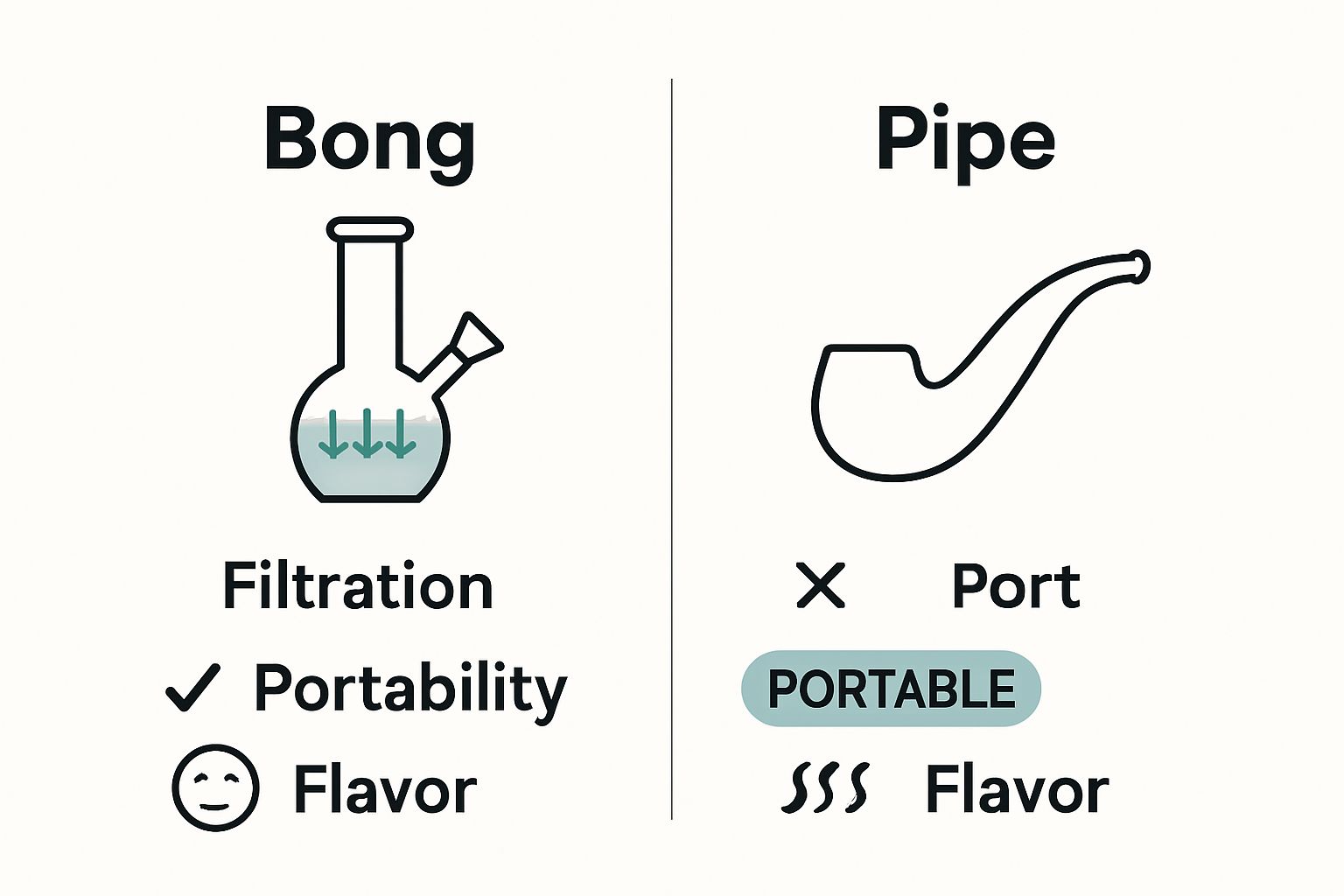
At their core, pipes and bongs are smoking instruments engineered to deliver controlled combustion and filtered inhalation. A pipe is typically a handheld device with a bowl for holding cannabis and a stem for inhaling smoke directly. Bongs, in contrast, are larger water-filtration devices that cool and filter smoke through a liquid chamber before inhalation.
Key Structural Differences
The primary distinguishing factor between pipes and bongs lies in their construction and smoke filtration mechanism. Pipes are compact, portable devices usually made from materials like glass, metal, wood, or ceramic. They offer direct smoke transmission with minimal cooling or filtering. Bongs feature more complex designs with multiple components:
- Water chamber for smoke cooling and filtration
- Downstem that directs smoke through water
- Bowl for holding cannabis
- Mouthpiece for inhalation
By incorporating water filtration, bongs provide a smoother, cooler smoking experience compared to traditional pipes. The water helps remove particulates and reduces the temperature of inhaled smoke, making each hit potentially less harsh on the user’s respiratory system.
To help you quickly compare bongs and pipes, the table below outlines their key differences in structure, performance, and practical use based on details from the article.
| Feature | Bong | Pipe |
|---|---|---|
| Size | Larger, less portable | Compact, highly portable |
| Filtration | Uses water for filtration and cooling | No filtration—direct smoke transmission |
| Smoking Experience | Smoother, cooler hits | Intense flavor, hotter smoke |
| Maintenance | More frequent and complex cleaning required | Easier, quicker to clean |
| Material Options | Mostly glass, can include complex designs | Glass, metal, wood, ceramic |
| Health Impact | Reduces some harmful particulates, cooler | Exposes to more particulates, hotter smoke |
| Ideal Use Case | At-home, refined sessions | On-the-go, quick use |
Practical Considerations
Choosing between a pipe and a bong depends on personal preference, lifestyle, and smoking context. Pipes offer discretion and portability, making them ideal for on-the-go use. Bongs provide a more sophisticated smoking experience with enhanced filtration and smoother hits, preferred by users seeking a more refined consumption method. Learn more about selecting the right smoking device to match your specific needs and preferences.
Why Choose a Bong or a Pipe? Exploring the Benefits
Choosing between a bong and a pipe involves understanding their unique advantages and how they align with individual smoking preferences and lifestyle needs. While both devices serve the fundamental purpose of consuming cannabis, they offer distinctly different experiences that cater to various user requirements. Check out our premium smoking accessories collection to explore high-quality options.
Performance and Smoking Experience
The performance differences between bongs and pipes significantly impact user satisfaction. Pipes provide a direct, immediate smoking experience with minimal preparation. They are perfect for quick, discreet sessions and offer an unfiltered taste profile that cannabis enthusiasts appreciate. Bongs, however, deliver a more sophisticated consumption method. According to scientific research on smoke filtration, water filtration in bongs can reduce harmful particulates and cool down smoke temperature, potentially minimizing respiratory irritation.
Practical Considerations for Users
Several key factors influence the choice between pipes and bongs:
- Portability requirements
- Desired smoking intensity
- Maintenance preferences
- Budget constraints
- Personal health considerations
Pipes excel in scenarios demanding mobility and simplicity. They are lightweight, easy to conceal, and require minimal setup. Travelers, outdoor enthusiasts, and those seeking quick consumption frequently prefer pipes. Bongs, while less portable, offer a more refined experience with superior smoke cooling and filtration.
Long-Term User Considerations
Beyond immediate smoking preferences, users should consider long-term implications. Pipes are typically more affordable and require less maintenance, making them attractive for occasional users or those on a budget. Bongs represent a more significant investment but provide a smoother, potentially healthier smoking experience. The water filtration mechanism in bongs not only cools smoke but can also trap some tar and reduce respiratory strain, making them an appealing choice for health-conscious cannabis consumers who prioritize a cleaner inhalation method.

How Bongs Work: The Science Behind Filtration and Cooling
Bongs represent a fascinating intersection of smoking technology and scientific principles, utilizing water and complex structural design to transform the cannabis smoking experience. Explore our advanced water pipe collection to see these scientific principles in action. The core mechanism of a bong revolves around sophisticated filtration and cooling techniques that significantly modify smoke characteristics before inhalation.
Fundamental Filtration Mechanics
The water chamber in a bong serves as a sophisticated filter, performing multiple critical functions during smoke transmission. According to scientific research on smoke filtration, the water acts as a physical barrier that removes particulate matter and water-soluble toxins from cannabis smoke. When smoke passes through water, several remarkable interactions occur:
- Larger smoke particles get trapped in water droplets
- Water-soluble compounds are dissolved and filtered out
- Smoke temperature is dramatically reduced
- Harmful particulates are mechanically separated
Thermal Dynamics of Smoke Cooling
The thermal cooling process in bongs represents a remarkable application of physical principles. As hot smoke travels through the water chamber, it undergoes rapid temperature reduction through direct contact with liquid. This heat transfer mechanism transforms the smoking experience by significantly lowering smoke temperature, which reduces respiratory tract irritation and provides a smoother inhalation.
Advanced Filtration Design Considerations
Modern bongs incorporate increasingly sophisticated design elements to enhance filtration efficiency. Percolators, for instance, create additional water contact points, multiplying the filtering and cooling effects. These intricate internal structures break smoke into smaller bubbles, increasing surface area and improving overall filtration performance. The result is a cleaner, cooler, and potentially less harmful smoking experience that represents a significant advancement over traditional dry pipes.
How Pipes Function: Direct Smoking Experience Explained
Pipes represent a fundamental and classic method of cannabis consumption, offering a straightforward and immediate smoking experience that connects users directly with their chosen herbal substance. Discover our curated hand pipe collection to explore the diverse world of pipe designs. The core functionality of pipes centers on creating a simple, unfiltered pathway for smoke transmission that prioritizes direct flavor and quick consumption.
Structural Design and Smoke Transmission
The archetypal pipe design consists of three primary components: the bowl, the stem, and the mouthpiece. Each element plays a crucial role in the smoking mechanics. The bowl serves as the primary chamber for holding cannabis, while the stem creates a direct conduit for smoke transmission. Unlike bongs, pipes do not incorporate water filtration, which means users experience an unmodified smoke profile that delivers intense flavor and immediate effects.
Thermal Characteristics and Inhalation Dynamics
Pipes generate unique thermal experiences during cannabis consumption. According to research on smoking device thermodynamics, the direct combustion method in pipes creates rapid heat transfer with minimal cooling interventions. This results in several notable characteristics:
- Immediate and intense flavor profiles
- Higher smoke temperature compared to water-filtered devices
- Faster onset of cannabinoid effects
- More concentrated smoke density
- Minimal smoke dilution or modification
Material Considerations and Performance Variations
The pipe’s material composition significantly influences its smoking performance and user experience. Glass pipes offer clean flavor transmission and aesthetic appeal, while metal pipes provide durability and heat resistance. Wooden pipes introduce subtle flavor nuances and traditional craftsmanship. Each material interacts differently with heat and smoke, creating unique sensory experiences for cannabis enthusiasts. The selection of pipe material becomes a personal choice that reflects individual preferences in taste, durability, and smoking ritual.
Choosing Between a Bong and a Pipe: Factors to Consider
Selecting the ideal smoking device requires careful evaluation of personal preferences, lifestyle needs, and consumption habits. Explore our comprehensive water pipe selection to understand the nuanced differences between smoking devices. The decision between a bong and a pipe involves balancing multiple factors that impact overall smoking experience and personal satisfaction.
This table summarizes the main factors to consider when deciding between a bong and a pipe, helping readers align their device choice with lifestyle and health considerations as discussed in the article.
| Factor | Bong | Pipe |
|---|---|---|
| Portability | Low—best for stationary use | High—easy to carry and conceal |
| Smoking Frequency | Suitable for frequent sessions | Ideal for occasional or quick sessions |
| Maintenance | Requires regular, detailed cleaning | Minimal maintenance |
| Initial Cost | Higher up-front investment | Usually more affordable |
| Health/Comfort | Smoother, filtered hits; less irritation | Harsher hits; greater respiratory impact |
| Storage Needs | Needs more space | Fits in small spaces |
| Discretion | Less discreet due to size and appearance | Very discreet and easy to hide |
Personal Consumption Patterns
Your individual smoking frequency and context play crucial roles in device selection. Occasional users might prefer pipes for their simplicity and portability, while regular consumers often gravitate towards bongs for their smoother, more refined experience. According to research on cannabis consumption methods, different devices can significantly alter the user’s physiological and sensory experience.
Practical Considerations and Lifestyle Alignment
Multiple factors influence the choice between bongs and pipes:
- Available storage and personal living space
- Budget constraints
- Maintenance requirements
- Desired intensity of smoking experience
- Frequency of cannabis consumption
- Discretion and portability needs
Pipes offer unparalleled convenience for users seeking quick, portable solutions. They require minimal setup, are easily concealable, and provide a direct smoking experience. Bongs, conversely, demand more maintenance and space but deliver a more sophisticated, filtered consumption method with potentially reduced respiratory irritation.
Health and Comfort Considerations
The long-term implications of your smoking device extend beyond immediate convenience. Bongs provide enhanced filtration through water chambers, potentially reducing the intake of harmful particulates. The cooling mechanism in bongs can make inhalation smoother and less harsh on respiratory tissues. Pipes, while more direct, expose users to higher temperature smoke and unfiltered particulates. Ultimately, the choice reflects a personal balance between convenience, experience quality, and individual health considerations.
Find the Perfect Smoking Experience With It’s 4:20 Somewhere
Still unsure if a bong or pipe matches your style after reading about their unique differences and benefits? Choosing the right tool is all about balancing convenience, smoothness, and personal comfort. If you want seamless filtration or crave the pure, direct hit only a pipe can deliver, the right accessory changes everything. Don’t settle for harsh inhales, tough cleaning routines, or limited options. Our collection gives you flexibility and control, so you can truly personalize your sessions and make each one your own.
Explore our huge selection of glass bongs, pipes, and premium accessories today. Experience detailed product info, customer reviews, and fast shipping right to your door. Take the next step now and discover why so many Canadians trust It’s 4:20 Somewhere as their go-to for quality, convenience, and unbeatable value.
Frequently Asked Questions
What are the main differences between a bong and a pipe?
Bongs are larger devices that use water for filtration and cooling, providing a smoother smoking experience. Pipes, on the other hand, are compact and deliver direct smoke without any water filtration. Consider your smoking preferences to determine which device suits you best.
How does the smoking experience differ between a bong and a pipe?
The smoking experience varies significantly; bongs generally offer cooler, smoother hits due to water filtration, while pipes deliver intense flavor and immediate effects. Evaluate whether you prefer the refined experience of a bong or the quick satisfaction of a pipe based on your smoking habits.
Are there specific health considerations when choosing between a bong and a pipe?
Yes, bongs can reduce exposure to harmful particulates and provide cooler smoke, potentially making them a healthier choice. Consider prioritizing a device that aligns with your health and comfort preferences by evaluating how each option impacts your respiratory experience.
How should I decide between a bong and a pipe based on my lifestyle?
Consider factors like portability, smoking frequency, and maintenance requirements. If you travel often or prefer a quick session, a pipe may be best; if you enjoy more elaborate smoking sessions at home, a bong could enhance your experience.
What maintenance do bongs and pipes require?
Bongs typically need more maintenance because of their complex design and water filtration system, while pipes are easier to clean and use. Decide how much time you’re willing to invest in cleaning and upkeep to choose the right device for your routine.
Can I use a bong or a pipe for any type of dry herb?
Yes, both bongs and pipes can be used for various dry herbs, but consider that the experience may vary by device. Experiment with different herbs in both devices to discover which provides the flavor and effects you prefer.
Recommended
- What is a Bong? A Complete Guide to Bongs – It’s 4:20 Somewhere
- 420 Blog – It’s 4:20 Somewhere
- GRAV | Medium Straight Base w/ Disc Water Pipe – Black Accent | Experience the Ultimate in Smooth Hits – It’s 4:20 Somewhere
- ROOR Tech | 18" Inline Water Pipe – White | Elevate Your Percolation Game – It’s 4:20 Somewhere

How to Choose Bong Accessories for Perfect Hits
Finding the perfect bong accessory can feel like searching for a missing puzzle piece. With joint sizes ranging from 10mm to 18mm and material differences that completely change your session, one wrong choice can ruin compatibility or smoke quality. Most people think grabbing any bowl or ash catcher from the nearest head shop will do the trick. The truth is, your ideal setup depends way more on your personal smoking habits than you might expect. Get ready for a smarter way to shop.
Table of Contents
Quick Summary
| Key Point | Explanation |
| 1. Assess your smoking habits first | Understanding your smoking frequency and style helps in selecting suitable bong accessories for an enhanced experience. |
| 2. Ensure accessory compatibility with bong | Measure joint size and gender to avoid compatibility issues, which can affect performance and enjoyment. |
| 3. Focus on essential accessories first | Invest in essential items like bowls and downstems before exploring optional upgrades to improve smoking quality. |
| 4. Prioritize quality and durability | Choose high-quality materials such as borosilicate glass for long-lasting accessories that enhance your smoking experience. |
| 5. Purchase from reputable sources | Research retailers with positive reviews and clear product info to ensure you’re buying authentic, quality accessories. |
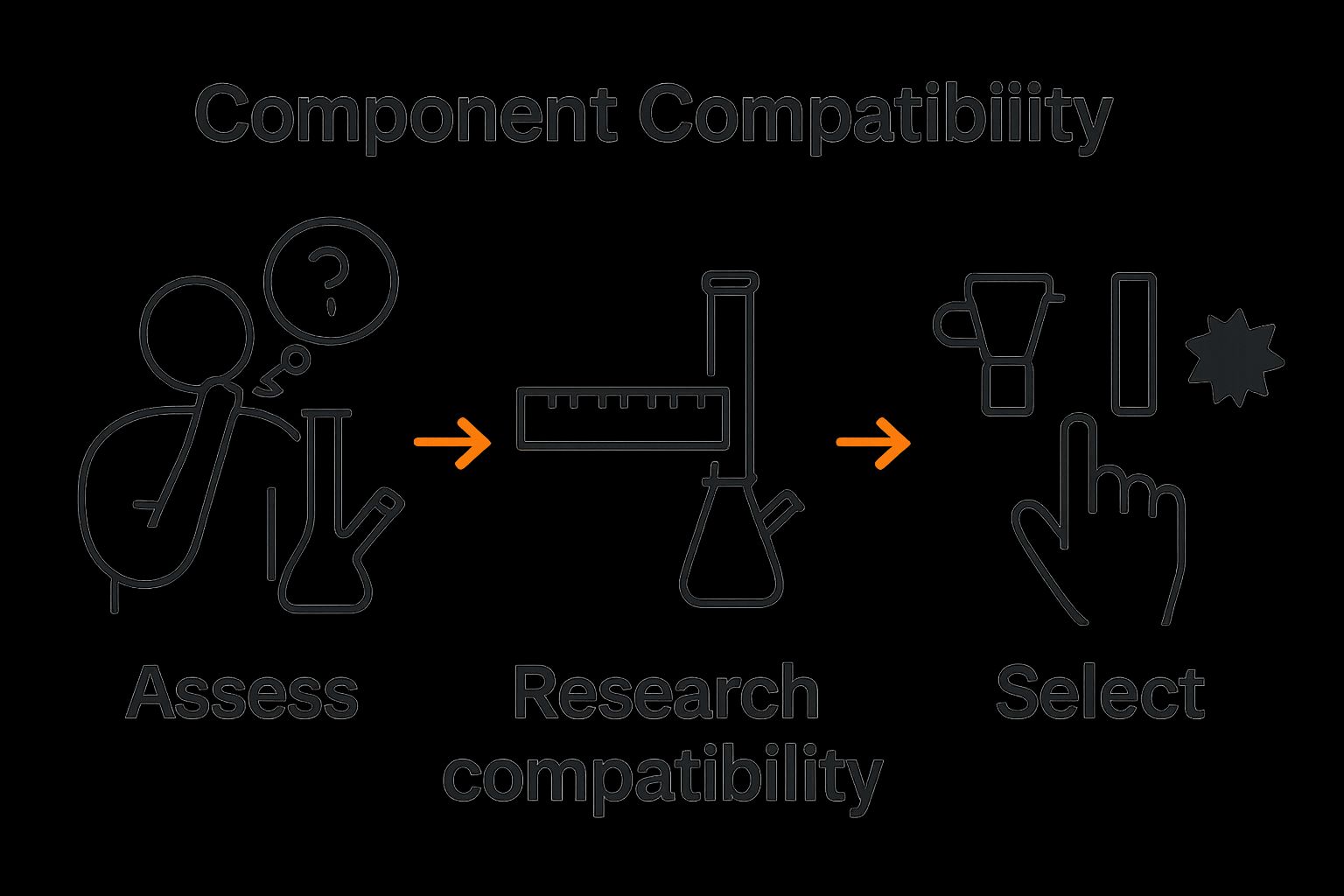
Step 1: Assess your smoking preferences and needs
Choosing the right bong accessories starts with understanding your unique smoking profile. This foundational step helps you make informed decisions that enhance your cannabis experience and match your individual consumption style.
Begin by honestly evaluating your smoking frequency and typical consumption habits. Are you an occasional weekend smoker or a daily cannabis enthusiast? Your usage pattern significantly influences which accessories will provide the most value.
 Heavy users might prioritize durability and performance, while casual consumers could focus more on aesthetic design and basic functionality.
Smoking Environment Considerations
Your typical smoking environment plays a crucial role in accessory selection. Home users have more flexibility with larger, more intricate setups, while those who prefer discretion or occasional travel might need compact, easily portable accessories. Consider factors like storage space, privacy needs, and whether you’ll be moving your equipment frequently.
Personal preferences around smoke intensity and filtration are equally important. Some smokers prefer smoother, cooler hits with maximum filtration, while others enjoy more direct, potent experiences. This preference will guide your choices in percolator styles, ash catchers, and downstem designs. Cannabis Consumer Research Institute suggests that individual consumption preferences vary widely, making personalized accessory selection critical.
Take time to reflect on your comfort level with different smoking techniques. Are you experienced with complex water pipe setups, or do you prefer straightforward, easy-to-use accessories? Beginners might want simpler accessories with fewer components, while seasoned users could explore more advanced, customizable options.
Budget is another essential factor in your assessment. Bong accessories range from budget-friendly basics to high-end, specialized pieces. Determine how much you’re willing to invest and balance that with your desired performance and aesthetic preferences. Remember that quality accessories can enhance your smoking experience and potentially save money long-term by improving efficiency and durability.
Finally, consider your maintenance comfort level. Some accessories require more frequent cleaning and more complex maintenance routines. If you prefer low-maintenance options, look for accessories made from materials that are easier to clean and maintain, such as certain types of glass or silicone components.
Step 2: Research compatible accessories for your bong type
Now that you understand your smoking preferences, diving into the world of bong accessory compatibility becomes crucial. Each bong has unique specifications that determine which accessories will work seamlessly with your setup. Joint size and gender are the most critical factors in ensuring proper fitment and functionality.
Start by measuring your bong’s joint size, which typically ranges from 10mm to 18mm. This measurement determines the diameter of attachments like bowls, ash catchers, and downstems. Most standard bongs feature either 14mm or 18mm joints, but precision is key. Use a digital caliper or ruler to confirm the exact measurement, avoiding potential compatibility issues that could ruin your smoking experience.
Understand your bong’s joint gender, which can be either male or female. This detail is critical when selecting accessories. A male joint requires a female attachment, while a female joint needs a male accessory. Mismatching these can lead to improper sealing and reduced performance. Cannabis Accessory Guide recommends taking a clear photo of your bong’s joint if you’re unsure about its specific characteristics.
The material of your bong also influences accessory selection. Glass bongs offer the most flexibility and typically work with a wide range of standard accessories. Silicone and acrylic bongs might have more limited options and require specialized attachments. Check your bong’s manufacturer specifications or original packaging for precise compatibility information.
When researching accessories, pay attention to specialized features that enhance your smoking experience. Percolator styles, ash catchers, and diffuser designs can dramatically improve smoke filtration and cooling. Some advanced water pipes like our comprehensive bong guide explains, offer modular designs that allow for easy accessory swapping.
Don’t overlook the importance of material quality and durability. Borosilicate glass remains the gold standard for bong accessories, offering heat resistance and clean taste. Cheaper alternatives might save money initially but can compromise your smoking experience through reduced performance or potential breakage.
Finalize your research by cross-referencing compatibility charts, reading user reviews, and consulting experienced smokers or reputable head shop professionals. Take your time to understand the nuanced details of your specific bong type, ensuring you select accessories that not only fit physically but also enhance your overall smoking experience.
Step 3: Select essential and optional accessories for your setup
With compatibility research complete, you’re ready to curate the perfect collection of bong accessories that transform your smoking experience. Essential accessories form the foundation of your setup, providing fundamental functionality and improved performance.
Every bong requires core accessories that directly impact your smoking quality. A high-quality bowl represents your primary consideration, serving as the entry point for your cannabis. Look for bowls made from durable materials like borosilicate glass, featuring screens that prevent herb particles from entering the water chamber. The bowl’s size and design should match your joint specifications and smoking preferences, whether you prefer smaller, controlled hits or larger, more robust sessions.
Downstems represent another critical accessory, acting as the critical conduit between your bowl and water chamber. Diffused downstems offer superior filtration, breaking smoke into smaller bubbles that cool and purify your hit. Measure your existing downstem carefully to ensure a perfect replacement, paying attention to length and joint size. Smoking Accessories Research recommends investing in a quality downstem that matches your specific bong design.
Beyond essential components, optional accessories can significantly elevate your smoking experience. Ash catchers represent a popular enhancement, providing an additional filtration stage that keeps your primary water chamber cleaner. These attachments trap ash and resin before they enter your bong, resulting in smoother, more enjoyable hits and reduced maintenance requirements.
Percolators offer another exciting optional accessory category. These intricate glass additions further fragment and cool smoke, creating multiple diffusion points that deliver exceptionally smooth hits. Different percolator styles like honeycomb, tree, and inline designs each offer unique filtration characteristics. Your choice depends on personal preference and desired smoke intensity.
Consider your cleaning and maintenance workflow when selecting accessories. Some complex attachments require more intricate cleaning processes. Silicone accessories and simple designs might appeal to those seeking low-maintenance options. Conversely, glass enthusiasts might appreciate more elaborate setups that demand careful, regular cleaning.
Budget plays a significant role in accessory selection. While it’s tempting to purchase every available add-on, focus on accessories that genuinely improve your smoking experience. Start with essential components, then gradually explore optional enhancements as your budget and interest allow. Our comprehensive bong guide can help you understand which accessories provide the most value.
Finally, ensure each selected accessory aligns with your initial smoking preference assessment. The goal is creating a personalized setup that maximizes enjoyment, comfort, and overall smoking satisfaction.
This step overview table summarizes each main step of the bong accessory selection process, including the key outcomes and considerations at each stage.
| Step | Key Action | Important Consideration |
| 1. Assess Preferences and Needs | Evaluate habits and environment | Determine frequency, style, and desired experience |
| 2. Check Compatibility | Measure joint size and gender | Avoid fit issues; consider material compatibility |
| 3. Choose Accessories | Select essential and optional | Prioritize essentials (bowl, downstem) |
| 4. Evaluate Quality and Durability | Inspect materials and build | Prefer borosilicate glass or silicone for longevity |
| 5. Buy from Reputable Retailers | Research retailers/brands | Prefer those with good reviews and detailed info |
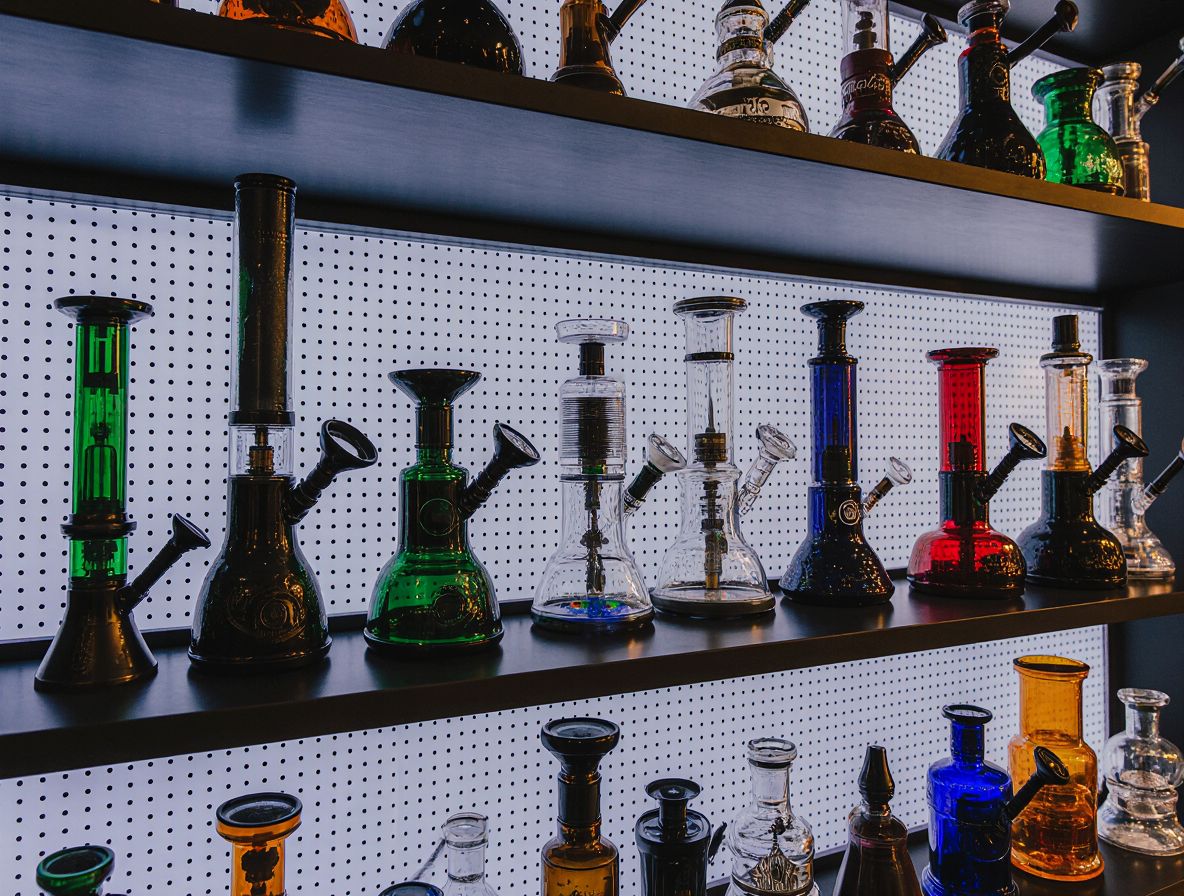
Step 4: Evaluate quality and design options for durability
Durability represents a critical factor when selecting bong accessories, directly impacting your long-term smoking experience and overall investment. Material quality determines an accessory’s resilience, with certain materials offering superior performance and longevity.
Borosilicate glass stands out as the gold standard for high-quality bong accessories. This specialized glass type demonstrates exceptional heat resistance and structural integrity, withstanding temperature fluctuations and potential impacts better than standard glass. When examining borosilicate components, look for thick glass measurements between 3-5mm, which provides enhanced durability without compromising delicate design elements.
Beyond material composition, manufacturing techniques significantly influence an accessory’s quality. Hand-blown glass accessories typically offer superior craftsmanship compared to mass-produced alternatives. Cannabis Consumption Research suggests examining weld points, joint connections, and overall symmetry as indicators of superior manufacturing.
Structural design plays a crucial role in accessory durability. Complex percolators and intricate filtration systems might look impressive but can introduce structural vulnerabilities. Simpler designs with fewer delicate components often prove more reliable over extended use. Consider accessories with reinforced connection points and minimal thin or protruding elements that could easily break.
Material alternatives like high-grade silicone provide interesting durability options. Silicone accessories offer remarkable impact resistance and flexibility, making them ideal for users prone to occasional accidents or those who travel frequently. These components can withstand drops and temperature changes that would shatter traditional glass accessories.
Here is a comparison table outlining the most common bong accessory materials, highlighting their key qualities and considerations to help you choose what best fits your needs.
| Material | Heat Resistance | Durability | Maintenance Required | Portability |
| Borosilicate Glass | Excellent | High (if thick) | Medium to High | Moderate |
| Standard Glass | Good | Moderate | Medium | Moderate |
| Silicone | Very Good | Excellent | Low | High |
| Acrylic | Fair | Moderate | Low to Medium | High |
Pay close attention to joint connections and sealing mechanisms. Precision-ground joints with smooth, even surfaces ensure better long-term performance and reduced risk of air leaks or structural degradation. Accessories featuring ground-glass connections typically provide tighter seals and more consistent performance compared to rubber or generic connections.
Our comprehensive bong guide recommends examining user reviews and manufacturer warranties as additional quality indicators. Reputable manufacturers often provide multi-year guarantees, reflecting confidence in their product’s durability.
Consider your personal usage patterns when evaluating durability. Frequent smokers might prioritize more robust accessories, while occasional users could opt for more aesthetically complex designs. Budget plays a role, but investing in higher-quality accessories often saves money long-term by reducing replacement frequency.
Ultimately, durability assessment requires balancing aesthetic preferences, functional requirements, and potential longevity. Take time to handle accessories in person when possible, examining glass thickness, connection points, and overall structural integrity. A careful, informed approach ensures you select accessories that not only look great but withstand the test of time.
Step 5: Purchase from reputable retailers or brands
Selecting the right retailer or brand represents the final critical step in your bong accessory journey. Reputation and customer support are paramount when investing in smoking accessories that will directly impact your experience. Not all retailers offer the same level of quality, authenticity, and post-purchase support.
Begin by researching online and physical head shops with established track records. Look for retailers that provide detailed product descriptions, clear high-resolution images, and comprehensive specifications for each accessory. Transparent businesses typically offer extensive information about material composition, manufacturing processes, and potential limitations of their products.
Cannabis Consumer Research suggests examining customer reviews as a crucial evaluation method. Pay attention to detailed reviews that discuss long-term product performance, not just initial impressions. Verified purchaser comments offer the most authentic insights into an accessory’s real-world functionality and durability.
Authenticity verification becomes crucial when purchasing specialized accessories. Counterfeit smoking accessories can pose significant risks, potentially compromising your smoking experience or even introducing harmful materials. Reputable retailers often provide authentication certificates or unique serial numbers for high-end glass pieces. Some brands implement QR code tracking systems that allow direct verification of product origins.
Consider the retailer’s return and warranty policies as significant indicators of product confidence. Comprehensive warranties that cover manufacturing defects demonstrate a brand’s commitment to quality. Flexible return policies provide additional protection, allowing you to exchange or return accessories that don’t meet your specific requirements.
Online platforms like our comprehensive bong guide can help navigate reliable purchasing channels. Look for retailers that offer discreet packaging, secure shipping, and customer privacy protection. Professional online head shops typically invest in robust shipping protocols to ensure accessories arrive intact and undamaged.
Price should not be the sole determining factor in your purchasing decision. While budget considerations matter, extremely low-priced accessories often indicate potential quality compromises. Aim for a balance between reasonable pricing and demonstrable quality. Midrange accessories from established brands frequently provide the best value, offering durability and performance without excessive costs.
Specialized glass blowers and boutique manufacturers can offer unique, handcrafted accessories with superior attention to detail. These artisan-produced pieces might cost more but frequently provide exceptional quality and distinctive design elements. Research the background of smaller manufacturers, examining their reputation within smoking accessory communities.
Before finalizing your purchase, cross-reference product specifications with your earlier compatibility research. Confirm joint sizes, material compatibility, and design alignment with your specific bong setup. A methodical approach ensures you select accessories that integrate seamlessly with your existing equipment.
Personalize Your Bong Experience the Smart Way
Struggling to find the perfect bong accessories for smoother, more enjoyable hits? If you have ever wasted time and money on accessories that don’t fit your setup or failed to deliver the performance you need, you are not alone. The article highlights how matching your personal smoking preferences and bong specifications with the right accessories can make all the difference and help you avoid common headaches like poor compatibility, low durability, or disappointing filtration.
At It’s 4:20 Somewhere, you get more than just variety. Whether you want a basic ash catcher for easier cleaning, a unique bowl to show off your style, or premium glassware built to last, our online shop covers all your needs. Every product page features real customer reviews and detailed measurements to remove the guesswork and help you build your perfect setup. Don’t settle for average when upgrading your bong. Visit It’s 4:20 Somewhere today and discover why so many Canadian smokers trust us for their accessories. Shop now while our top sellers are in stock and experience cleaner, smoother hits every session.
Frequently Asked Questions
What factors should I consider when choosing bong accessories?
When choosing bong accessories, consider your smoking preferences, typical consumption habits, smoking environment, budget, and maintenance comfort level. Each of these factors will help you select accessories that enhance your overall smoking experience.
How do I determine the right joint size and gender for my bong accessories?
To determine the right joint size, measure your bong’s joint diameter, which typically ranges from 10mm to 18mm, with most using either 14mm or 18mm. Joint gender is classified as male or female; ensure that male joints pair with female accessories and vice versa to avoid compatibility issues.
What are the essential bong accessories I should have?
Essential bong accessories include a high-quality bowl and a downstem. The bowl should match your bong’s joint size and allow for effective herb loading, while a quality downstem enhances smoke filtration and cooling when replaced or upgraded.
Why is durability important when choosing bong accessories?
Durability is critical because high-quality materials, like borosilicate glass, can withstand temperature fluctuations and impacts better than inferior options. Investing in durable accessories can enhance your smoking experience and long-term satisfaction by preventing frequent replacements.
Recommended
Creative Ways to Customize Bongs for Unique Smoking Experiences
Customizing your bong is more than a hobby. It is where creativity meets science. Most people think it is all about flashy art or quirky accessories. But the real secret is in the prep. Proper preparation is the foundation of any successful bong customization project. Skipping those first steps can make any fancy design short-lived. Imagine turning your smoking session into a true expression of style or even boosting performance. That is where your journey really begins.
Table of Contents
Quick Summary
| Key Point | Explanation |
| 1. Gather quality materials for customization | Collect essential tools like safety glasses, fine-grit sandpaper, and adhesives before starting your project. |
| 2. Choose a versatile base design | Pick a base design that complements your smoking style while allowing for effective modifications and artistic expression. |
| 3. Clean and prepare the surface thoroughly | Surface preparation is crucial for successful artwork application; use rubbing alcohol and ensure all surfaces are dry before decorating. |
| 4. Select compatible accessories for upgrades | Use accessories like percolators and ash catchers to enhance functionality, ensuring they fit your bong’s specifications. |
| 5. Conduct performance testing after modifications | Systematically check for leaks and airflow issues to ensure the customized bong operates efficiently and safely before use. |
Step 1: Gather Your Customization Supplies
Customizing your bong requires thoughtful preparation and strategic tool selection. Before diving into the creative process, you’ll want to assemble a comprehensive toolkit that enables precision, creativity, and safe modifications. Proper preparation is the foundation of any successful bong customization project.
Your primary goal in this first step is to collect all necessary materials and tools that will transform an ordinary smoking piece into a personalized work of art. Start by creating a dedicated workspace with good lighting, a clean flat surface, and plenty of room to spread out your supplies. This organization will help you approach the customization process methodically and reduce the chances of accidental damage.
Essential Tools and Materials
For most bong customization projects, you’ll need a carefully curated collection of supplies. Here are the key items to gather:
-
Safety glasses or protective eyewear
-
Rubbing alcohol and cotton swabs for cleaning
-
Fine-grit sandpaper (various grits from 120 to 400)
-
Heat-resistant epoxy or specialized glass adhesive
-
Precision cutting tools (glass scoring tools, ceramic cutting blades)
-
Decorative elements like glass paint, decals, or colored resin
-
Protective gloves
-
Microfiber cloths for cleaning and polishing
When selecting your materials, prioritize quality and compatibility. Research from materials science experts suggests that the chemical composition of adhesives and decorative materials significantly impacts the durability and safety of modified smoking devices.
Remember that not all bongs are created equal. Glass bongs offer the most versatility for customization, while silicone or acrylic pieces might require different approaches. Understanding your base material is crucial before beginning any modification process. Take time to inspect your bong thoroughly, noting its current condition, material type, and any existing features that might influence your customization strategy.
Preparing a clean, organized workspace and gathering high-quality tools sets the stage for a successful bong transformation.
Below is a table summarizing essential tools and materials needed for bong customization, including their purpose to help you prepare your workspace efficiently.
| Tool/Material | Purpose |
| Safety glasses | Protect eyes during cutting/sanding |
| Rubbing alcohol & cotton swabs | Clean surfaces for optimal adhesion |
| Fine-grit sandpaper (120-400) | Smooth surfaces and assist decoration |
| Heat-resistant epoxy/adhesive | Secure decorative elements or accessories |
| Precision cutting tools | Accurately modify bong components |
| Decorative elements | Personalize with paint, decals, resin |
| Protective gloves | Prevent hand injuries and contamination |
| Microfiber cloths | Clean and polish finished surfaces |
Step 2: Choose a Base Design for Your Bong
Selecting the right base design is a critical foundation for your bong customization journey. This step transforms your smoking experience from ordinary to extraordinary by matching your personal style with the perfect structural framework. The base design will significantly influence not just aesthetics, but also functionality and overall smoking performance.
Learn more about classic bong designs before making your selection. Your base design choice depends on multiple factors including personal preference, smoking style, and the specific customization techniques you plan to implement.
Classic base designs offer distinct advantages and challenges. Straight tube bongs provide a minimalist profile with direct smoke paths, making them ideal for precision modifications like intricate glass etching or complex percolator additions. Beaker base designs offer superior stability and increased water volume, which can enhance filtration and create more opportunities for creative structural alterations.
Understanding Base Design Variations
The anatomy of your chosen bong will dictate customization possibilities. Consider these key design characteristics:
-
Chamber volume and shape
-
Joint angle and size
-
Existing percolation systems
-
Material composition
-
Overall structural integrity
Experienced customizers recommend selecting a base design that provides structural flexibility. Thick glass bongs with simple, clean lines offer the most adaptable canvas for creative modifications. Pay attention to the glass thickness, joint compatibility, and potential stress points that might impact your customization process.
For concentrate enthusiasts and flower smokers alike, the base design serves as more than just a smoking vessel. It represents a personal statement and functional art piece. Some smokers prefer wider bases for enhanced stability, while others prioritize sleek, compact designs that emphasize portability and aesthetic minimalism.
As you evaluate potential base designs, visualize your end goal. Are you aiming for a psychedelic color transformation, intricate geometric etching, or functional performance enhancement? Your base design should align seamlessly with your creative vision and technical capabilities. Take time to examine potential bongs from multiple angles, testing their structural integrity and imagining the customization potential that lies within each unique piece.
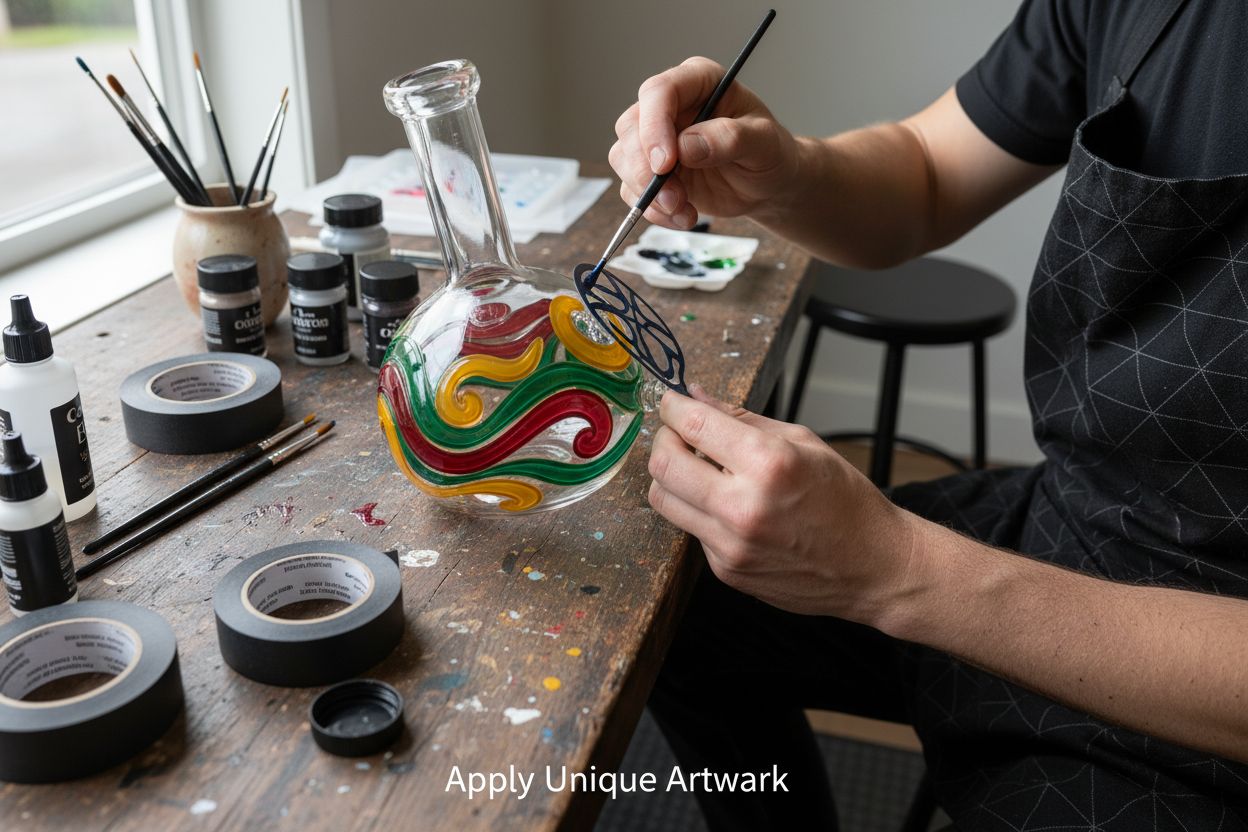
Step 3: Apply Unique Artwork or Décor
Transforming your bong into a personalized masterpiece requires careful artistic execution and strategic design choices. This step moves beyond basic customization into true creative expression, where your smoking device becomes a reflection of your individual style and aesthetic sensibility. The artwork you choose will define your bong’s character and make it a unique conversation piece.
Explore our collection of glass art techniques for inspiration before beginning your project. Artistic application demands precision, patience, and a clear vision of your desired outcome.
Glass decoration techniques range from subtle embellishments to bold, eye-catching designs. Beginners might start with simpler methods like glass painting or decal application, while advanced enthusiasts can explore more complex techniques such as sandblasting, etching, or intricate resin work. Each approach offers distinct aesthetic possibilities and requires different skill levels and tools.
Selecting Your Artistic Approach
Consider these primary artistic methods for bong customization:
-
Permanent glass paint with heat-resistant properties
-
Precision vinyl decals and stencils
-
Sandblasting for textured designs
-
Colored resin inlays
-
Ceramic paint with specialized glass finishing
Successful artwork application begins with thorough surface preparation. Clean your bong meticulously using high-percentage rubbing alcohol, ensuring no residue remains that could interfere with paint adhesion or design clarity. Allow the surface to dry completely before introducing any decorative elements.
Technical precision matters as much as creative vision. Use painter’s tape to create clean lines and protect areas you do not want to modify. Work in a well-ventilated space with consistent temperature to help materials cure properly. Some decorative techniques require multiple layers and careful curing times, so patience becomes a critical artistic skill.
This table compares different artistic techniques for decorating your bong, outlining their complexity and main visual effects to help you choose the best method for your project.
| Technique | Complexity Level | Main Visual Effect |
| Glass paint (permanent) | Beginner | Colorful, glossy finishes |
| Vinyl decals & stencils | Beginner | Crisp, defined patterns |
| Sandblasting | Intermediate | Textured, frosted surfaces |
| Colored resin inlays | Advanced | Bold, dimensional accents |
| Ceramic paint | Intermediate | Durable, matte or glossy look |
Remember that your bong’s artwork should not compromise its fundamental functionality. Avoid covering crucial areas like airways, joints, or percolation chambers. Strategic design placement ensures your creative expression enhances rather than inhibits your smoking experience. Consider the visual flow, balancing intricate details with overall aesthetic harmony to create a truly personalized smoking accessory.
Step 4: Upgrade Functionality with Accessories
Accessory upgrades represent the most dynamic way to transform your bong from a standard smoking device into a personalized performance powerhouse. This step focuses on enhancing your smoking experience through strategic component selection that improves filtration, cooling, and overall enjoyment. The right accessories can dramatically elevate your bong’s technical capabilities and aesthetic appeal.
Discover advanced smoking accessories that can revolutionize your smoking setup. Thoughtful accessory selection requires understanding how different components interact and complement your specific smoking preferences.
Percolator attachments serve as the cornerstone of functional upgrades. These ingenious devices break smoke into smaller bubbles, increasing surface area and providing more efficient cooling and filtration. Different percolator styles like honeycomb, tree, or showerhead designs offer unique smoking experiences, each with distinct advantages in smoke smoothness and temperature reduction.
Strategic Accessory Selection
Consider these critical accessory categories for comprehensive bong enhancement:
-
Ash catchers for improved smoke cleanliness
-
Advanced diffuser downstems
-
Specialized bowl pieces with built-in screens
-
Ice catchers for additional smoke cooling
-
Splash guards to prevent water intrusion
Compatibility is the most crucial factor when selecting accessories. Measure your bong’s joint size and angle precisely before purchasing any new components. Standardized joint sizes like 14mm and 18mm ensure proper fitting, while variations in male or female connections demand careful matching.
Research indicates that advanced filtration systems can significantly reduce harmful particulate matter in smoking experiences. Activated carbon filters and specialized percolation systems offer more than aesthetic upgrades they provide tangible improvements in smoke quality and smoothness.
Beyond technical considerations, accessories allow personal expression. Mix and match components to create a truly unique smoking experience that reflects your individual style and functional preferences.
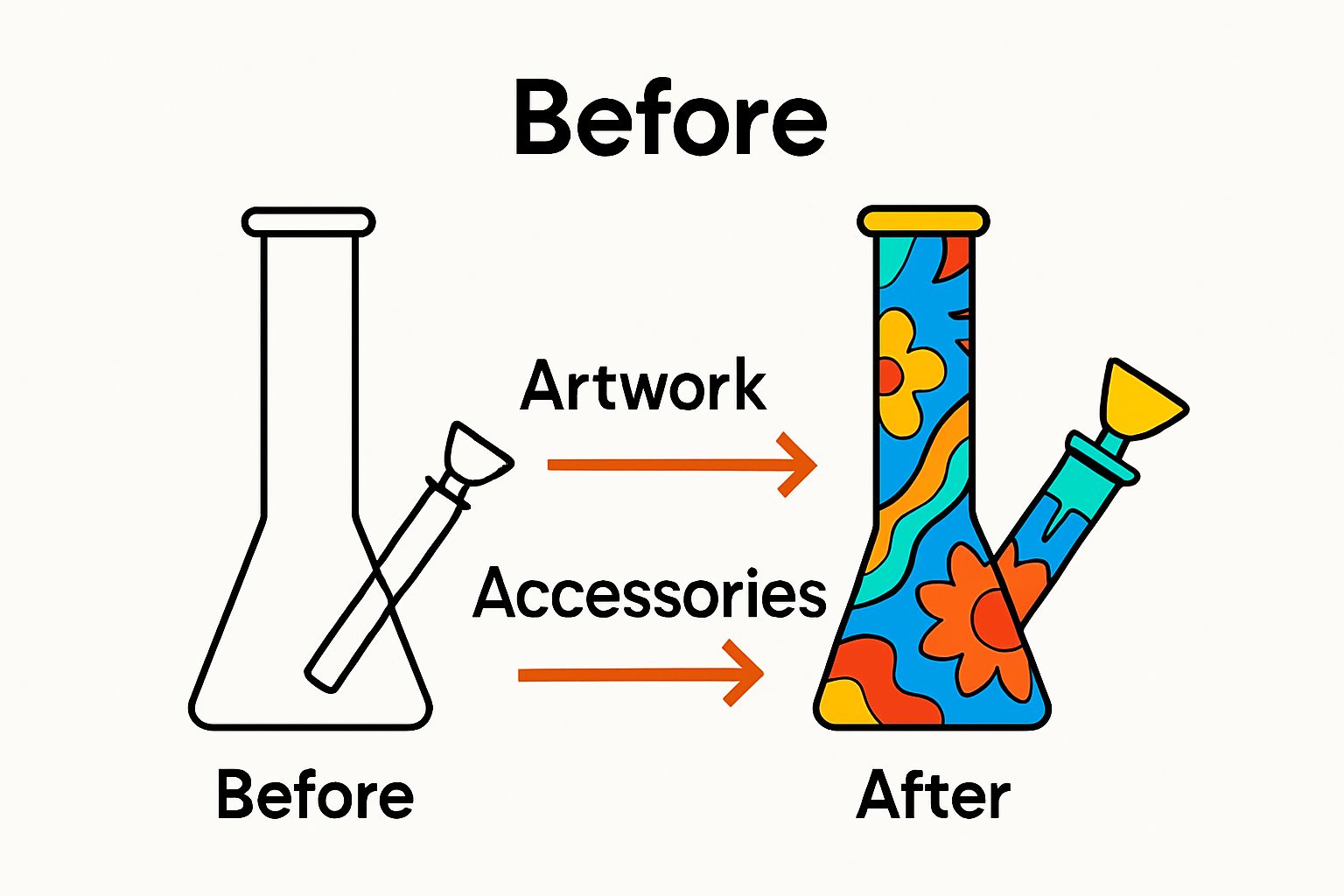 Some enthusiasts prioritize maximum filtration, while others seek minimal drag or compact designs. Your accessory selection should balance personal aesthetic desires with practical smoking performance, transforming an ordinary bong into a customized smoking instrument that feels perfectly tailored to your needs.
Step 5: Test for Performance and Leak Check
After investing time and creativity into customizing your bong, comprehensive performance testing becomes crucial to ensure your modifications deliver the desired smoking experience. This final step validates the functionality and integrity of your meticulously crafted smoking device. Thorough testing protects your investment and guarantees optimal performance before actual use.
Explore professional testing techniques to understand advanced diagnostic methods. Performance evaluation goes beyond simple visual inspection, requiring systematic and methodical approaches to assess your bong’s modifications.
Research on inhalation device testing suggests a multi-stage verification process. Begin with a comprehensive visual examination, checking all new connections, artwork applications, and accessory integrations for potential structural weaknesses or imperfections.
Look for any signs of stress in glass joints, uneven paint application, or potential adhesive irregularities that might compromise your bong’s integrity.
Comprehensive Performance Verification
Utilize these critical testing parameters to ensure your customized bong meets performance standards:
-
Airflow resistance measurement
-
Water filtration efficiency check
-
Seal and connection integrity test
-
Thermal stress evaluation
-
Structural stability assessment
Systematic testing requires patience and attention to detail. Start by filling the bong with clean water and examining its balance and stability. Carefully rotate the piece, checking for any unexpected liquid movement or potential leakage points. Next, conduct a dry run by mimicking inhalation without actual combustion. Listen for unusual sounds that might indicate airflow restrictions or structural issues.
Temperature and pressure testing represent advanced verification techniques. Gradually introduce slight temperature variations to assess how your customizations respond to environmental changes. Pay special attention to newly added accessories or artwork, ensuring they maintain structural integrity under different conditions.
Remember that successful customization is a balance between creative expression and functional reliability. Your goal is not just aesthetic transformation but creating a smoking device that performs exceptionally while reflecting your unique style. Take time to meticulously test each modification, understanding that true craftsmanship lies in the details of performance and precision.
Personalize Your Bong Like a Pro With the Right Tools and Accessories
If you want to turn your bong into a one-of-a-kind piece but struggle to find all the right parts and supplies in one place, you are not alone. Many smokers hit a wall when searching for unique base designs, durable glassware, or high-quality accessories needed to bring their vision to life. The article above digs into the pain of starting a customization project without the proper tools or guidance. It emphasizes how the right base design, precise upgrades, and reliable accessories lay the groundwork for a bong that feels like it’s truly yours.
Skip the guesswork and get creative with confidence by exploring It’s 4:20 Somewhere. Here, you can browse the most diverse selection of bongs and unique upgrades in Canada—from solid glass bongs ready for your next art project, to expertly crafted ash catchers, downstems, and everything you need to upgrade functionality. Whether you are looking for inspiration or the next perfect piece, shop now to transform every step of your customization journey into something inspired and worry-free. Discover your next base design or accessory at It’s 4:20 Somewhere and start making your ideas a reality today.
Frequently Asked Questions
What supplies do I need to customize my bong?
You’ll need safety glasses, rubbing alcohol, fine-grit sandpaper, heat-resistant epoxy, precision cutting tools, decorative elements like glass paint or decals, protective gloves, and microfiber cloths for cleaning.
How can I choose the best base design for my bong customization?
Consider factors like chamber shape, joint angle, and existing percolation systems. A thick glass bong with clean lines provides the most flexibility for various modifications.
What artistic techniques can I use to decorate my bong?
You can use permanent glass paint, vinyl decals, sandblasting, colored resin inlays, or ceramic paint. Each method varies in complexity and visual effect, allowing for personal expression.
How do I test my customized bong for performance and leaks?
Fill the bong with water to check stability and look for leaks. Conduct a dry run to check airflow and listen for unusual sounds. Assess all new connections and modifications for structural integrity.
Recommended

Understanding Smoking Pipe Maintenance Guide for Enthusiasts
Smoking pipes might look simple but they need a lot more attention than most people realize. Studies show that improper pipe maintenance can increase bacterial contamination by over 300 percent compared to regularly cleaned pipes. Most enthusiasts think a quick rinse keeps things safe and smooth. That’s where they get it wrong because true pipe care is a science and skipping it can ruin the flavor, the experience, and even the pipe itself.
Table of Contents
Quick Summary
| Takeaway | Explanation |
| Regular maintenance preserves smoking quality. | Consistent care prevents residue buildup, enhancing flavor and airflow for a better smoking experience. |
| Understand your pipe’s material needs. | Different materials like glass, wood, and metal require specific maintenance techniques for optimal performance. |
| Hygiene is critical for health. | Proper cleaning reduces bacterial growth, lowering health risks associated with unclean smoking devices. |
| Deep cleaning extends pipe lifespan. | Periodic deep cleaning and careful storage prevent degradation, allowing pipes to remain functional longer. |
| Monitor for performance impairment. | Recognizing signs like airflow restriction and temperature inconsistencies helps in timely maintenance to ensure quality smoking. |
What is Smoking Pipe Maintenance and Its Importance?
Smoking pipe maintenance represents a critical practice for enthusiasts who want to preserve the quality, performance, and longevity of their smoking accessories. This process goes beyond simple cleaning, encompassing a comprehensive approach to care that ensures optimal smoking experiences and protects your investment.
Understanding the Core Principles
At its essence, smoking pipe maintenance involves systematic care strategies that prevent resin buildup, minimize performance degradation, and extend the functional life of your pipes. Unlike casual cleaning, true maintenance requires understanding the intricate relationship between your pipe’s materials, usage patterns, and potential wear mechanisms.
Read our comprehensive guide on smoking pipe care reveals that proper maintenance directly impacts three critical aspects of your smoking experience:
-
Performance Preservation: Preventing residue accumulation that can alter smoke flavor and restrict airflow
-
Structural Integrity: Protecting delicate glass, ceramic, or metal components from gradual deterioration
-
Hygiene Management: Reducing bacterial growth and potential health risks associated with poorly maintained smoking devices
The Science Behind Pipe Degradation
Pipes undergo significant stress during regular use. According to scientific research from Materials Science journals, repeated heat exposure, chemical interactions, and mechanical stress contribute to microscopic structural changes. These transformations can compromise your pipe’s functional quality over time.
Effective maintenance disrupts this degradation cycle by implementing strategic cleaning protocols, carefully selected cleaning solutions, and proactive inspection techniques.
By understanding these scientific principles, smoking pipe enthusiasts can develop a nuanced approach that goes beyond surface-level cleaning, ensuring their cherished accessories remain in peak condition for years of enjoyment.
Why Proper Maintenance Matters for Smoking Experience
Proper smoking pipe maintenance transcends routine cleaning, representing a fundamental approach to preserving the quality, performance, and overall enjoyment of your smoking experience. Understanding the nuanced impact of maintenance helps enthusiasts make informed decisions about their smoking accessories.
Performance and Flavor Preservation
Maintenance directly influences the sensory aspects of smoking. Resin accumulation, mineral deposits, and residual buildup can dramatically alter the taste profile of your smoking materials. Learn more about smoking accessories reveals that consistent maintenance ensures a clean, pure smoking experience by preventing flavor contamination.
Key performance impacts include:
-
Airflow Optimization: Preventing blockages that restrict smooth smoke passage
-
Temperature Consistency: Maintaining even heat distribution for balanced combustion
-
Material Integrity: Protecting the pipe’s structural composition from degradation
Health and Hygiene Considerations
Beyond performance, maintenance plays a crucial role in user health. According to microbiology research from the Journal of Applied Microbiology, improperly maintained smoking devices can harbor significant bacterial colonies and potential pathogens.
Regular maintenance interrupts bacterial growth cycles, reduces potential health risks, and creates a more hygienic smoking environment. This proactive approach protects not just the smoking device, but also the user’s respiratory health and overall well-being.
How Smoking Pipes Work: Key Components Explained
Smoking pipes represent intricate devices engineered to deliver a controlled, enjoyable smoking experience through sophisticated design and precise mechanical principles. Understanding their fundamental structure helps enthusiasts appreciate the complexity behind these seemingly simple smoking accessories.
Fundamental Structural Components
Each smoking pipe comprises several critical elements working in harmonious interaction. Explore our professional smoking accessories guide highlights that these components are meticulously designed to optimize smoke filtration, cooling, and delivery.
Key structural elements include:
-
Bowl: The primary chamber where smoking material is placed and initially combusted
-
Stem: Responsible for channeling smoke from the bowl toward the mouthpiece
-
Shank: Connecting segment between bowl and stem that facilitates smooth smoke transition
Mechanical Principles of Smoke Transmission
According to engineering research from Tobacco Science Journal, smoking pipes operate through precise thermodynamic and fluid mechanics principles. The pipe’s design creates a controlled environment that manages several critical factors during smoke generation and transmission.
Smoke movement depends on multiple interconnected mechanical processes:
-
Airflow Dynamics: Creating negative pressure that draws smoke through the pipe
-
Heat Management: Dispersing combustion temperature to prevent material burning
-
Condensation Control: Minimizing moisture accumulation within pipe structures
The intricate engineering behind smoking pipes transforms a simple combustion process into a refined, controlled smoking experience by strategically managing temperature, airflow, and material interaction.
Common Issues and Their Impact on Pipe Function
Smoking pipes, despite their seemingly robust construction, are vulnerable to a range of performance-degrading issues that can significantly compromise their functionality and user experience. Understanding these potential problems enables enthusiasts to proactively protect their smoking accessories and maintain optimal performance.
Structural and Material Degradation
Explore our comprehensive smoking accessories guide reveals that material integrity plays a crucial role in maintaining pipe performance. Different materials react uniquely to repeated heat exposure, mechanical stress, and chemical interactions.
Key structural vulnerability factors include:
-
Thermal Stress: Repeated heating and cooling cycles causing microfractures
-
Chemical Erosion: Residue buildup altering material composition
-
Mechanical Wear: Gradual degradation from handling and usage
Performance Impairment Mechanisms
According to materials science research from Advanced Engineering Materials, smoking pipes experience complex degradation processes that progressively compromise their functional capabilities.
Critical performance impairment mechanisms encompass:
-
Airflow Restriction: Residue accumulation blocking smoke channels
-
Temperature Inconsistency: Uneven heat distribution affecting combustion quality
-
Flavor Contamination: Residual buildup altering smoke taste profile
By recognizing these potential issues, smoking pipe enthusiasts can implement strategic maintenance protocols that preserve their device’s performance, ensuring a consistently high-quality smoking experience.
This table summarizes the most common issues affecting smoking pipe performance and their specific impacts, as explained in the article, to aid in swift identification and troubleshooting.
| Issue | Description | Impact on Pipe Function |
| Airflow Restriction | Residue accumulation blocks smoke channels | Difficult or blocked draws |
| Temperature Inconsistency | Uneven heat distribution | Poor combustion, uneven burning |
| Flavor Contamination | Residual buildup alters smoke taste profile | Unpleasant or altered flavor |
| Thermal Stress | Repeated heating/cooling causes microfractures | Potential cracks, weakened structure |
| Chemical Erosion | Residue buildup alters material composition | Material breakdown, compromised pipe |
| Mechanical Wear | Gradual degradation from usage and handling | Structural weaknesses, leaks |
Best Practices for Maintaining Your Smoking Pipes
Maintaining smoking pipes requires a strategic, methodical approach that goes beyond basic cleaning. Professional enthusiasts understand that preservation involves comprehensive care techniques designed to protect the pipe’s structural integrity, performance, and sensory qualities.
Material-Specific Maintenance Strategies
Explore our premium smoking accessories selection reveals that different pipe materials demand unique maintenance protocols. Understanding these nuanced requirements is crucial for long-term preservation and optimal performance.
To help readers quickly compare the maintenance needs of different pipe materials, the following table summarizes the features and care recommendations discussed in the article.
| Pipe Material | Cleaning Needs | Special Considerations |
| Glass | Gentle cleaning with specialized solutions | Avoid abrasive pads to prevent scratches |
| Wood | Careful moisture management, periodic conditioning | Prevent waterlogging, condition with oil |
| Metal | Regular inspection for oxidation and integrity | Check for rust, avoid harsh chemicals |
Key material-specific considerations include:
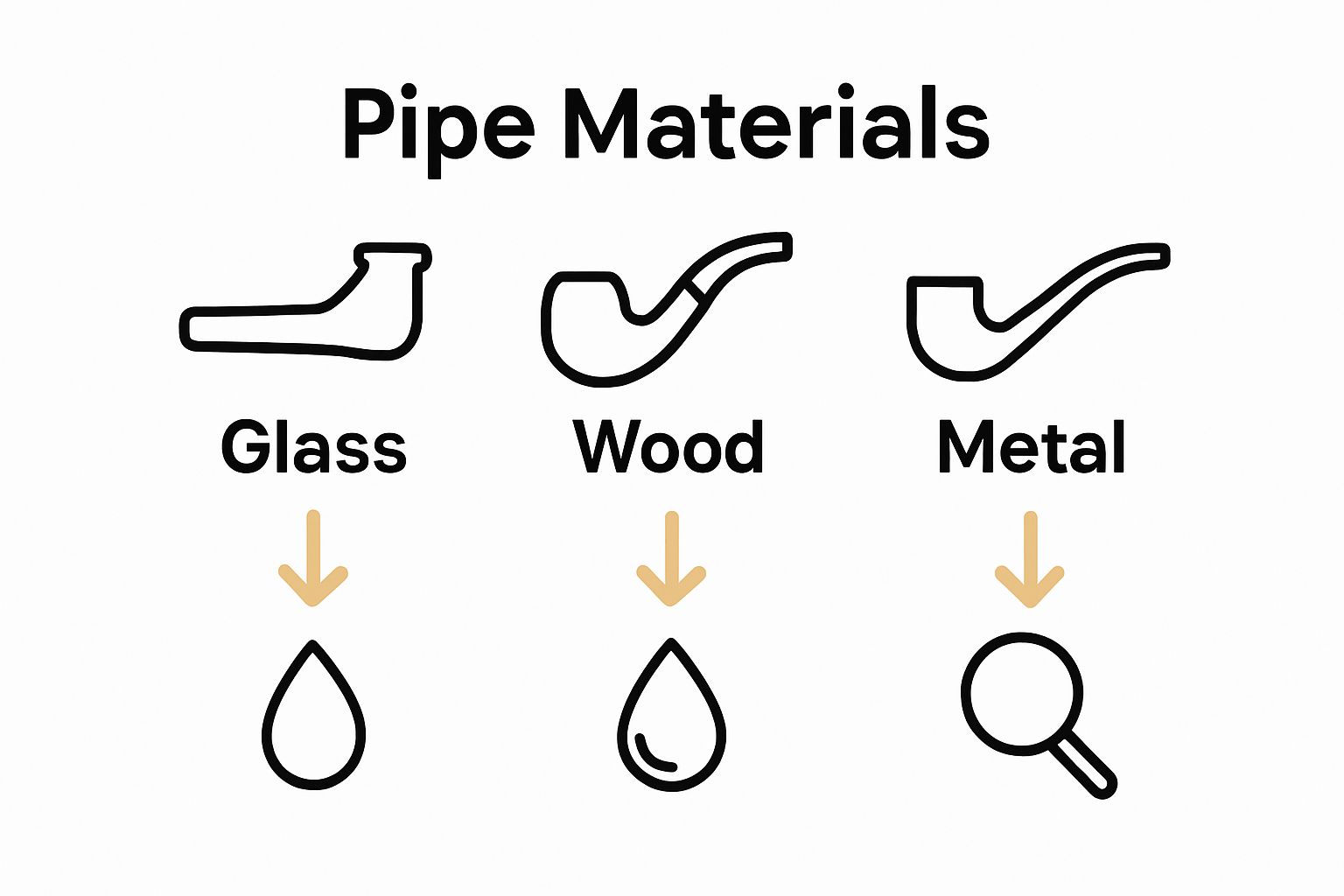
-
Glass Pipes: Require gentle cleaning with specialized solutions
-
Wooden Pipes: Need careful moisture management and periodic conditioning
-
Metal Pipes: Demand regular inspection for oxidation and structural integrity
Advanced Maintenance Techniques
According to materials preservation research from the International Journal of Conservation, effective maintenance transcends surface-level cleaning. It involves understanding the complex interactions between material composition, environmental factors, and usage patterns.
Comprehensive maintenance techniques encompass:
-
Temperature Management: Controlling exposure to extreme heat variations
-
Storage Protocols: Implementing controlled environments that minimize degradation
-
Periodic Deep Cleaning: Systematic removal of accumulated residues
By adopting these sophisticated maintenance strategies, smoking pipe enthusiasts can significantly extend their accessories’ functional lifespan and preserve the quality of their smoking experience.
Elevate Your Smoking Pipe Maintenance with the Right Tools and Accessories
If you are serious about the longevity and performance of your smoking pipes, you already know how frustrating it can be when residue buildup ruins flavor or airflow becomes restricted. Our latest guide highlighted the importance of strategic maintenance, tailored storage solutions, and material-specific care. But finding trustworthy products that match your maintenance routine can feel overwhelming.
Discover how much smoother your routine can be when you shop with the experts at It’s 4:20 Somewhere. Choose from our premium selection of glass pipes, metal hand pipes, and wooden pipes that are built to withstand repeated use and facilitate easy cleaning. Looking for advanced smoking accessories or tools that simplify deep cleaning? We have you covered with practical solutions and budget-friendly deals. Do not let residue or neglected care ruin your experience. Shop today for the high-quality accessories you need and keep your collection performing at its best.
Frequently Asked Questions
What are the main benefits of smoking pipe maintenance?
Proper smoking pipe maintenance enhances performance by preventing residue buildup, preserves the pipe’s structural integrity, and promotes hygiene, reducing health risks associated with poorly maintained devices.
How can I tell if my smoking pipe needs maintenance?
Signs that your smoking pipe needs maintenance include difficulty with airflow, unusual tastes in your smoke, visible residue buildup, and any signs of material degradation such as cracks or discoloration.
What are the best cleaning methods for different types of smoking pipes?
Glass pipes require gentle cleaning with specialized solutions, wooden pipes need careful moisture management, and metal pipes should be regularly inspected for oxidation. Each material has unique maintenance needs to ensure longevity and performance.
How often should I clean and maintain my smoking pipe?
It is recommended to clean and maintain your smoking pipe after each use to prevent residue buildup, with deeper cleaning and inspections done at regular intervals based on frequency of use and the type of material of the pipe.
Recommended
Understanding Types of Hand Pipes Explained Clearly
Hand pipes have been the go-to choice for smokers for decades, with millions of users appreciating their portability and simple design. Many assume the magic is in their ease of use or the cool shapes on the shelf. But there’s more going on under the surface. The real surprise is how the material and construction of a hand pipe can shape your entire smoking experience. Glass hand pipes are prized for their pure flavor transmission and visual appeal, while silicone models are nearly indestructible. The small details in design and material could change how you enjoy your next smoke.
Table of Contents
Quick Summary
| Takeaway | Explanation |
| Understand hand pipe anatomy | Key parts include the bowl, chamber, mouthpiece, and carb hole, impacting user control and experience. |
| Choose material based on preferences | Materials like glass, metal, wood, and silicone affect flavor, durability, and aesthetics. |
| Select shape for desired effects | Pipe shape influences smoke cooling, draw resistance, and handling comfort. |
| Consider lifestyle for selection | Evaluate usage frequency, portability, and budget to find the perfect hand pipe. |
| Innovative features enhance experience | Look for designs with built-in ash catchers and ergonomic grips for improved usability. |
What Are Hand Pipes and Their Purpose?
Hand pipes represent a classic and portable smoking tool designed for cannabis and tobacco consumption, offering users a straightforward and convenient method of enjoying their preferred smoking material. These compact devices have been a staple in smoking culture for generations, providing a direct and personal smoking experience that appeals to both novice and experienced users.
Understanding the Anatomy of Hand Pipes
Hand pipes typically consist of several fundamental components that enable their functionality. The primary parts include:
-
Bowl: The wide, concave area where smoking material is placed and ignited
-
Chamber: The hollow section where smoke accumulates before inhalation
-
Mouthpiece: The narrow end where users draw smoke into their mouth
-
Carb Hole: A small opening that helps control airflow and smoke density
These simple yet ingenious design elements allow users to control their smoking experience with remarkable precision. Explore our guide on smoking accessories to learn more about the intricate world of smoking devices.
Purpose and Versatility of Hand Pipes
Hand pipes serve multiple purposes beyond basic smoking. They represent a combination of functionality, portability, and personal expression. Unlike larger smoking devices like bongs, hand pipes offer discrete and quick consumption methods that are perfect for on-the-go use. Their compact size allows users to carry them easily in pockets, bags, or small storage containers.
Moreover, hand pipes come in diverse materials like glass, wood, metal, and silicone, each offering unique aesthetic and practical qualities. Glass pipes, for instance, provide clean flavor profiles, while metal pipes offer durability. Wood pipes can deliver a more traditional smoking experience with subtle flavor nuances.
For cannabis enthusiasts and casual users alike, hand pipes represent more than just a smoking tool they are a personal statement of style, preference, and smoking ritual. Whether you’re seeking a quick, discreet session or a moment of contemplative enjoyment, hand pipes continue to be a fundamental element of smoking culture.
Understanding the types, materials, and purposes of hand pipes can help smokers make informed choices that align with their individual preferences and lifestyle needs.
The Importance of Material in Hand Pipe Design
The material selection for hand pipes plays a critical role in determining the overall smoking experience, affecting factors like heat resistance, durability, flavor preservation, and aesthetic appeal. Understanding the nuanced characteristics of different materials helps smokers make informed decisions about their preferred smoking tools.
Material Properties and Performance
Each material used in hand pipe construction offers unique characteristics that significantly impact the user’s experience. Check out our latest hand pipe collection to explore diverse material options.
Key material considerations include:
-
Heat Conductivity: How quickly and efficiently the material transfers and dissipates heat
-
Durability: The pipe’s resistance to wear, breakage, and potential damage
-
Flavor Preservation: The material’s ability to maintain or neutralize the smoking material’s inherent flavors
-
Aesthetic Quality: Visual and tactile characteristics that enhance personal enjoyment
Comparative Analysis of Pipe Materials
Glass pipes remain popular for their pure flavor transmission and visual transparency. They allow users to observe smoke movement and provide a clean, unadulterated taste experience. Glass does have limitations in durability and can be more fragile compared to other materials.
Metal pipes offer exceptional strength and portability. Typically crafted from stainless steel or aluminum, these pipes withstand significant handling and temperature variations. However, metal can sometimes impart a subtle metallic undertone to the smoke, which might alter the flavor profile.
Wooden pipes bring a traditional aesthetic and natural heat absorption properties. Materials like briar, olive wood, and rosewood provide unique thermal characteristics and can subtly enhance the smoking experience. Research from materials science suggests that porous materials like certain woods can absorb moisture and impurities, potentially delivering a cleaner smoking session.
Silicone represents a modern alternative, offering unprecedented durability, flexibility, and easy cleaning. These pipes are virtually indestructible, temperature resistant, and ideal for users seeking a low-maintenance smoking experience.
Ultimately, the choice of hand pipe material reflects personal preference, smoking style, and individual priorities in taste, durability, and aesthetic expression.
To help you compare the properties of different hand pipe materials, the following table summarizes their key characteristics and performance factors.
| Material | Flavor Preservation | Durability | Heat Conductivity | Maintenance | Aesthetic Quality |
| Glass | Excellent, pure flavor | Fragile, can break | Moderate | Easy to clean | Transparent, colorful |
| Metal | May alter flavor | Highly durable | Heats up quickly | Generally easy | Metallic, industrial look |
| Wood | Adds subtle nuance | Durable if maintained | Moderate/slow transfer | Requires more care | Classic, natural finish |
| Silicone | Neutral, keeps flavor | Nearly indestructible | Low heat transfer | Very easy, flexible | Vivid colors, flexible |
How Different Shapes Affect Smoking Experience
Hand pipe shapes are not merely aesthetic choices but integral design elements that profoundly influence smoking dynamics, comfort, and overall user experience. The geometric configuration of a pipe determines critical aspects like smoke cooling, draw resistance, and ergonomic handling.
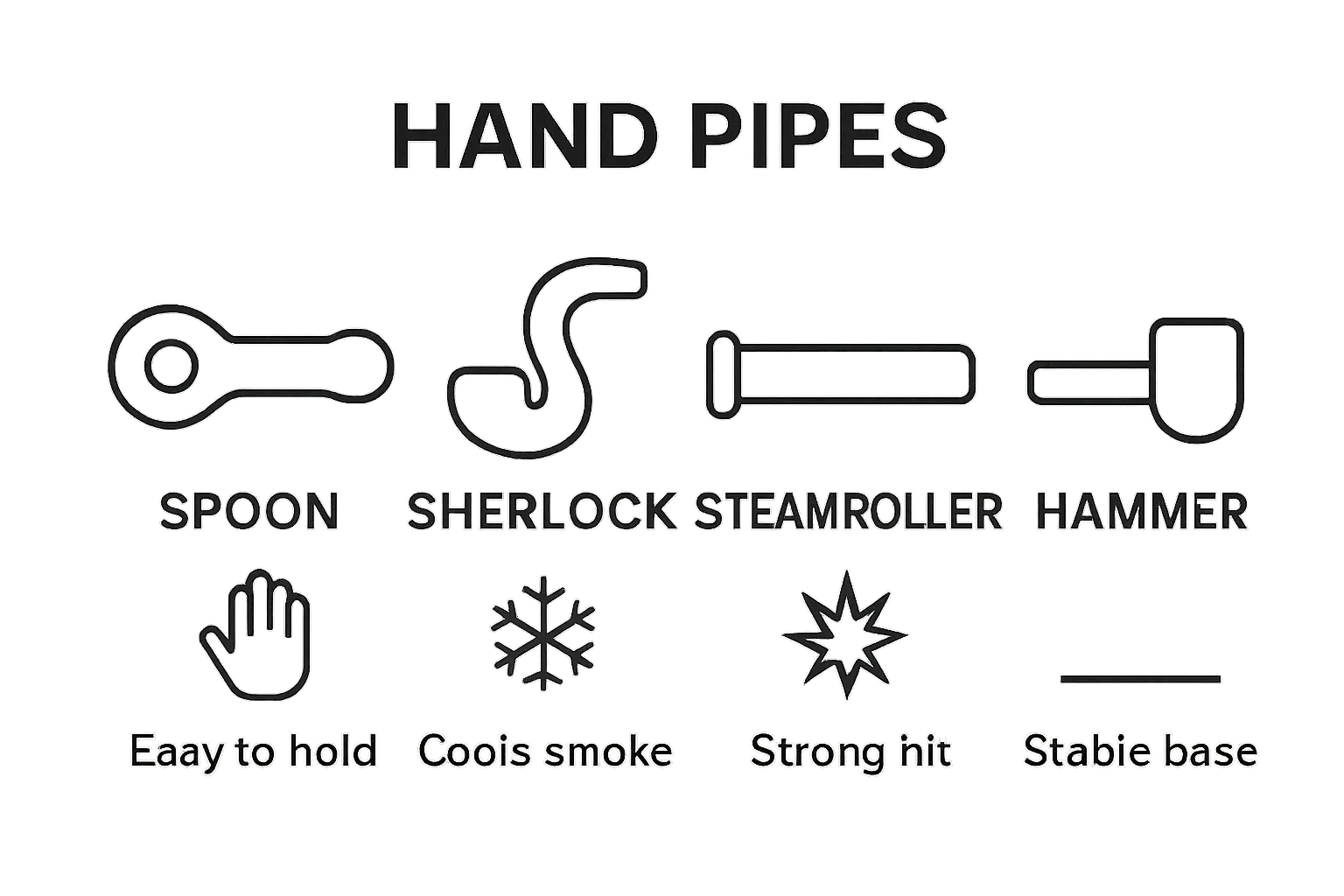
Fundamental Pipe Shapes and Their Characteristics
Pipe shapes can be categorized into several fundamental designs, each delivering unique smoking qualities. Learn more about smoking accessories to understand the nuanced world of smoking tools.
Key shape classifications include:
-
Spoon Pipes: The most common design with a classic, simple curved structure
-
Sherlock Pipes: Featuring an iconic curved neck reminiscent of traditional tobacco pipes
-
Steamroller Pipes: Characterized by a straight, tubular design with open ends
-
Hammer Pipes: Featuring a flat base that allows the pipe to stand upright
Smoke Dynamics and Ergonomic Considerations
Spoon pipes represent the quintessential hand pipe shape, offering a compact and straightforward smoking experience. Their curved design allows for natural hand positioning and provides a moderate smoke cooling effect. The bowl placement typically allows for easy loading and efficient burning of smoking materials.
Sherlock pipes introduce an elevated neck that helps cool smoke before inhalation. This shape provides additional distance between the burning material and the user’s mouth, potentially delivering a smoother hit. The elongated design also offers improved grip and a more sophisticated aesthetic appeal.
Steamroller pipes deliver a more direct and intense smoking experience. Their straight, open-ended design allows for rapid smoke accumulation and powerful hits. These pipes are preferred by users seeking a more immediate and robust consumption method.
Hammer pipes combine stability with ergonomic design. The flat base enables users to place the pipe down without risk of tipping, while the angled neck provides comfortable mouth positioning. This shape often appeals to users valuing both functionality and convenience.
Ultimately, pipe shape selection represents a personal journey of discovering what best matches individual smoking preferences, comfort levels, and desired sensory experiences.
Below is a table comparing some of the most common hand pipe shapes and their primary characteristics to assist you in choosing based on your preferred smoking experience.
| Pipe Shape | Description | Smoke Cooling | Draw Resistance | Ergonomic Features |
| Spoon | Classic, compact with curved structure | Moderate | Medium | Easy to hold, simple design |
| Sherlock | Curved neck, resembles traditional pipes | Enhanced | Mild | Extended grip, elevated mouthpiece |
| Steamroller | Straight, tubular with open ends | Minimal | Low | Direct hits, powerful experience |
| Hammer | Upright with flat base and angled neck | Good | Medium | Stable placement, comfortable grip |
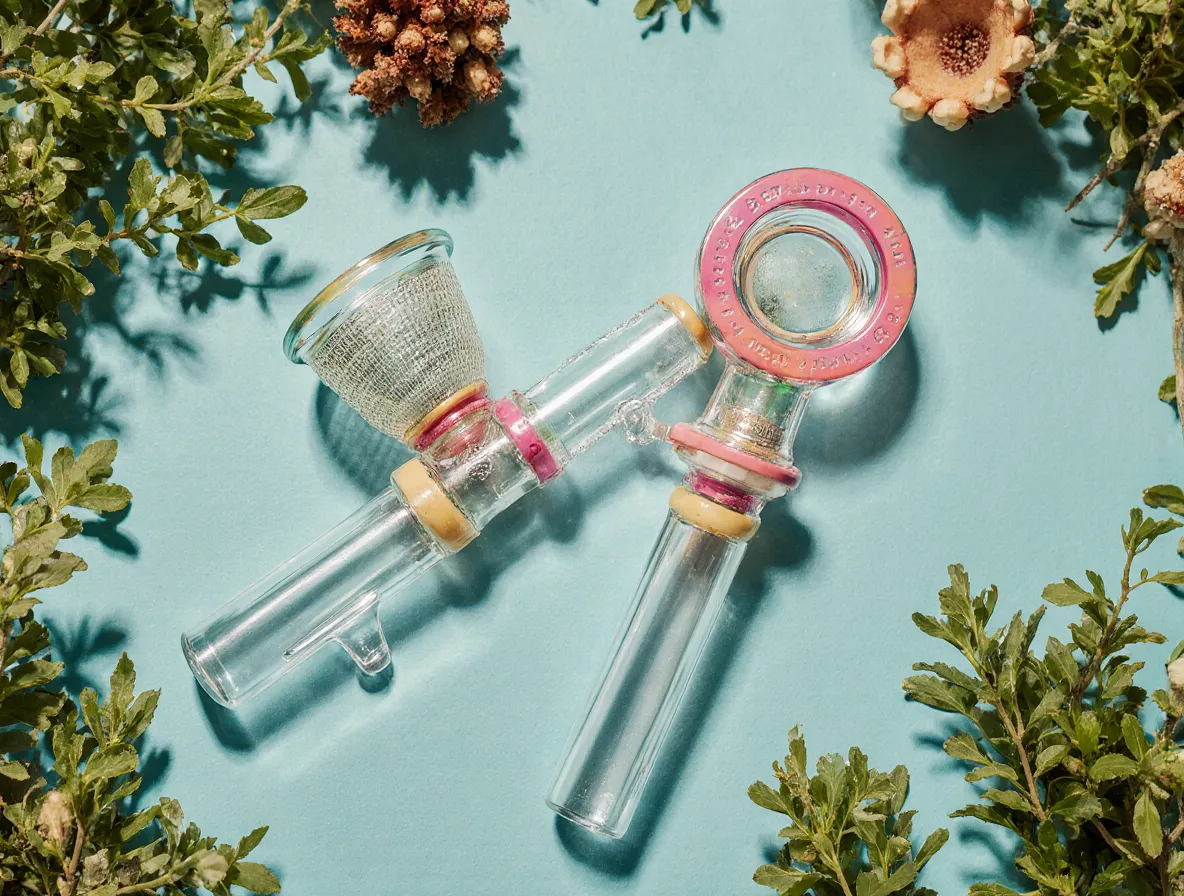
Exploring Unique Features Across Pipe Types
Hand pipes have evolved beyond simple smoking tools, incorporating innovative design features that enhance user experience, functionality, and personal expression. These unique characteristics transform pipes from mere accessories into sophisticated smoking instruments that cater to individual preferences and technological advancements.
Innovative Design Elements
Modern hand pipes integrate cutting-edge features that significantly improve smoking quality and user convenience. Discover our latest smoking accessories to explore these innovative designs.
Key innovative features include:
-
Built-in Ash Catchers: Prevent ash from entering the user’s mouth
-
Carb Holes: Allow precise airflow control during smoking
-
Multi-chamber Designs: Enhance smoke cooling and filtration
-
Ergonomic Grip Patterns: Improve handling and comfort
Advanced Functional Enhancements
Some contemporary hand pipes incorporate sophisticated technological elements that transform the traditional smoking experience. Research from design archives suggests that specialized pipe designs can dramatically improve user interaction and smoking performance.
Glass pipes now feature percolation systems similar to those found in bongs, with intricate internal structures that cool and filter smoke before inhalation. These microscopic chambers create turbulence, breaking down smoke into smaller particles and reducing temperature, resulting in smoother, more enjoyable hits.
Silicone and hybrid pipes introduce unprecedented durability and flexibility. Some models feature collapsible designs, temperature-resistant materials, and even integrated cleaning mechanisms. These innovations address traditional limitations of glass and metal pipes, offering users more versatile and low-maintenance smoking options.
Concentrate-specific pipes have emerged with specialized design features like built-in dabbing tools, reinforced heating areas, and precise temperature control mechanisms. These specialized pipes cater to users consuming cannabis concentrates, providing a more controlled and efficient consumption method.
Ultimately, the evolution of hand pipe design reflects a broader trend of personalization, technological integration, and user-centered innovation in smoking accessories.
Choosing the Right Hand Pipe for Your Needs
Selecting the ideal hand pipe involves carefully evaluating personal preferences, smoking habits, lifestyle considerations, and individual performance requirements. This decision transcends mere aesthetic selection, representing a nuanced process of matching specific smoking tools to unique user needs.
Personal Smoking Profile Assessment
Before selecting a hand pipe, users must consider several critical personal factors. Explore our comprehensive smoking accessories guide to understand selection dynamics.
Key assessment criteria include:
-
Frequency of Use: Daily smokers require more durable options
-
Portability Requirements: Travel-focused users need compact designs
-
Smoking Material Preferences: Different pipes suit various smoking substances
-
Budget Constraints: Price ranges significantly impact available options
Health and Performance Considerations
Medical research highlighting potential health impacts emphasizes the importance of material selection and smoking technique. Users must evaluate pipes not just for immediate pleasure but for long-term wellness.
Beginner smokers might prefer smaller spoon pipes with straightforward designs, offering easier handling and gentler hits. These pipes provide an excellent introduction to smoking techniques without overwhelming complexity.
Experienced users often gravitate toward more sophisticated designs like Sherlock or multi-chamber pipes that offer enhanced smoke cooling and filtration. These advanced configurations deliver smoother, more nuanced smoking experiences with improved temperature management.
Consider your specific lifestyle when selecting a hand pipe. Professionals or discreet users might prefer compact, easily concealable silicone or metal pipes. Conversely, home enthusiasts could invest in larger, more intricate glass pieces that serve both functional and decorative purposes.
Ultimately, the perfect hand pipe represents a personal journey of discovering what seamlessly integrates with your individual smoking preferences, comfort levels, and practical requirements.
Upgrade Your Hand Pipe Experience With the Perfect Match
Are you struggling to choose the right hand pipe material or shape for your lifestyle? With so many options highlighted in our guide—like glass, wood, silicone, and metal—making an informed decision can feel overwhelming. Whether you care about flavor, portability, or style, finding the right fit can make all the difference in your smoking sessions.
Stop settling for a pipe that does not suit your needs. At It’s 4:20 Somewhere, you will find a massive selection of premium hand pipes and smoking accessories designed for every preference. Explore our glass hand pipe collection and discover pipes tailored for both beginners and seasoned smokers. Tap into expert support, fast Canadian shipping, and exclusive deals right now. Want to see more options? Check out our full lineup of smoking accessories and redefine your next session today.
Frequently Asked Questions
What are the main components of a hand pipe?
Hand pipes typically consist of a bowl for holding the smoking material, a chamber for smoke accumulation, a mouthpiece for inhalation, and a carb hole for controlling airflow.
How do different materials affect the smoking experience?
Material selection impacts heat conductivity, durability, flavor preservation, and aesthetics. Glass provides pure flavor, metal offers durability, wood adds warmth, and silicone delivers flexibility and easy maintenance.
What are the benefits of different hand pipe shapes?
Different shapes, such as spoon, Sherlock, steamroller, and hammer, influence aspects like smoke cooling, draw resistance, and ergonomic handling, allowing users to choose based on personal preference and smoking style.
What innovative features can be found in modern hand pipes?
Many contemporary hand pipes include built-in ash catchers, multi-chamber designs for smoke filtration, ergonomic grips for comfort, and specialized features for concentrates to enhance the overall smoking experience.
Recommended

How to Use Bong Accessories for an Enhanced Experience
Setting up a bong the right way goes far beyond tossing together some glass and water. Most people don’t realize that even a slight mismatch between accessories can tank the whole experience. Here’s the wild surprise. The magic actually happens before you ever light up when careful prep delivers smoother, cleaner hits that make every session feel totally different.
Table of Contents
- Step 1: Gather Your Bong Accessories And Setup
- Step 2: Prepare Your Bong For Use
- Step 3: Attach Accessories For Optimal Performance
- Step 4: Fill Water And Check Levels For Efficiency
- Step 5: Test Your Setup And Adjust As Needed
Quick Summary
| Key Point | Explanation |
|---|---|
| 1. Gather compatible accessories | Ensure all components like the downstem, bowl, and screens fit together well to avoid breakage and enhance performance. |
| 2. Use clean, filtered water | Fill the bong with fresh, room temperature filtered water for optimal filtration and prevent unwanted tastes during smoking. |
| 3. Test for smooth airflow | Conduct a dry run to check for resistance and stability, adjusting components as necessary for a seamless smoking experience. |
| 4. Adjust water levels carefully | Maintain the water level about one inch above the downstem’s bottom to optimize filtration and prevent splash-back during inhalation. |
| 5. Inspect all components | Before use, check for cracks or loose joints to ensure a secure and safe smoking session; proper maintenance is key to performance. |
Step 1: Gather Your Bong Accessories and Setup
Preparing your bong setup is more than just assembling random pieces it’s about creating a smooth, enjoyable smoking experience. Before diving into your session, understanding what accessories you need and how they work together is crucial. A well-organized setup can transform an average smoking experience into something exceptional.
Start by gathering all essential components for your bong. You’ll want a clean, stable surface to work on with good lighting. Your core accessories should include the bong itself, a compatible downstem, a glass bowl, screens, and potentially an ash catcher. Check out our complete guide on bong components to understand each piece’s function.
The glass bowl is your primary loading area for your smoking material. Choose a bowl that fits your downstem’s joint size precisely – typically 14mm or 18mm. Screens are small but critical accessories that prevent material from falling through the bowl, ensuring a more controlled and efficient burn. Pro tip: ceramic screens tend to last longer and provide more consistent filtration compared to metal or glass alternatives.
When selecting accessories, consider compatibility and material quality. Not all accessories work universally across different bong designs. Glass-on-glass connections provide the most airtight and smooth experience, while rubber or silicone adaptors can help bridge slight size differences. Matching your accessories carefully prevents potential breakage and ensures optimal performance.
Before your actual smoking session, do a dry run. Connect all components without any material, checking for smooth fits and stable positioning. This preliminary setup helps identify any potential issues like loose joints or misaligned parts. A well-fitted bong with properly matched accessories will deliver superior smoke quality, smoother draws, and a more enjoyable overall experience.
Below is a step overview table summarizing each main step for enhancing your bong experience, along with estimated difficulty and the primary goal of each phase.
| Step | Description | Difficulty | Key Outcome |
|---|---|---|---|
| 1 | Gather all compatible accessories and prep your workspace | Easy | Assembled, organized setup |
| 2 | Clean, inspect, and assemble core bong components | Moderate | Clean, safe, functional base |
| 3 | Attach ash catcher, percolators, and screens for performance | Moderate | Personalized filtration, smooth airflow |
| 4 | Fill bong with filtered water to correct level and check | Easy | Optimal filtration, no splash-back |
| 5 | Test the assembled setup and adjust for best results | Moderate | Secure, efficient, enjoyable session |
Remember, gathering your accessories is about creating a personalized, functional setup that suits your specific preferences and smoking style. Take your time, inspect each piece, and don’t rush the preparation process.
Here is a table organizing the major bong accessories discussed, including their purpose and compatibility notes to help ensure effective selection and use.
| Accessory | Purpose | Compatibility Considerations |
|---|---|---|
| Downstem | Directs smoke into water for filtration | Must match bong joint size (typically 14mm or 18mm) |
| Glass Bowl | Holds smoking material | Should fit downstem joint size exactly |
| Screens | Prevents material falling through bowl | Choose size for bowl, ceramic lasts longest |
| Ash Catcher | Traps ash/resin before main chamber | Must match joint size and angle (45° or 90°) |
| Percolator | Further filters/cools smoke | Integrated or add-on; style affects draw |
| Rubber/Silicone Adapter | Bridges size mismatches | Only if accessory sizes differ slightly |
Step 2: Prepare Your Bong for Use
Preparing your bong is a critical step that determines the quality of your entire smoking experience. This stage is about creating a clean, functional setup that maximizes filtration, comfort, and overall enjoyment. Learn more about optimal bong preparation techniques to elevate your session.
Begin with a thorough cleaning of all bong components. Water quality matters significantly – use fresh, room temperature filtered water that will provide smooth, cool filtration without introducing unwanted mineral tastes. Fill the chamber to an optimal level, typically about one inch above the downstem’s bottom opening. Too little water reduces filtration, while too much can create unnecessary resistance when inhaling.
Next, inspect each glass component meticulously. Check for any hairline cracks, chips, or structural weaknesses that could compromise the bong’s integrity. Pay special attention to the joint connections, ensuring they’re clean and free from residue that might prevent a tight seal. A well-maintained piece prevents potential accidents and ensures consistent performance.
Carefully insert your downstem into the bong’s joint, making sure it’s seated securely and at the correct angle. The angle is crucial – it determines how effectively your material will burn and how smoothly smoke will travel through the water. When placing your glass bowl, confirm it fits snugly into the downstem without wobbling. A loose bowl can disrupt airflow and lead to inefficient burning.
According to research on smoking equipment safety, proper preparation isn’t just about aesthetics – it directly impacts your smoking experience’s safety and quality. Take a moment to do a “dry run” without any smoking material. Pull air through the bong to check for smooth, unrestricted airflow. Listen for any unusual sounds that might indicate loose connections or blockages.
The final preparatory step involves positioning your bong on a stable, flat surface away from edges or areas where it might be accidentally knocked over. Stability is key to preventing potential breakage. Your bong should feel secure and balanced, ready for an optimal smoking session that delivers clean, filtered, and enjoyable hits.
Step 3: Attach Accessories for Optimal Performance
Accessorizing your bong is more than just aesthetic enhancement – it’s about creating a personalized smoking experience that maximizes filtration, smoothness, and overall enjoyment. Each accessory serves a specific purpose that can dramatically transform your smoking session.
Explore our comprehensive guide to bong accessories to understand the nuanced world of smoking gear.
Ash catchers are your first line of defense in maintaining a clean bong. These ingenious accessories trap ash and resin before they enter the main chamber, significantly reducing maintenance and preserving the purity of your hits. When selecting an ash catcher, match the joint size precisely with your bong – typically 14mm or 18mm – to ensure a perfect, airtight connection. Angle matters significantly – choose an ash catcher with an angle that complements your bong’s design, usually 45 or 90 degrees, to optimize smoke trajectory and filtration.
Percolators represent the next level of smoke refinement. These intricate glass additions break down smoke into smaller bubbles, increasing surface area and cooling the hit before it reaches your lungs. Different percolator styles – like honeycomb, tree arm, or showerhead – offer unique filtration characteristics. Some smokers prefer multiple percolators for maximum smoothness, while others appreciate a more direct hit. Consider your personal preference and smoking style when selecting these accessories.
According to research on smoking equipment design, the physical configuration of your accessories directly impacts smoke quality. When attaching accessories, gentle but firm pressure is key. Avoid overtightening, which can cause stress on glass joints and potentially lead to micro-fractures. A smooth, snug fit that allows slight movement prevents unnecessary strain on your glassware.
Screens are another crucial accessory that often gets overlooked. These small but mighty components prevent material from falling through the bowl, ensuring a more controlled and efficient burn. Ceramic screens typically outlast metal alternatives, providing more consistent filtration and easier cleaning. When inserting a screen, ensure it sits flat and covers the bowl’s bottom holes completely without obstructing airflow.
Before finalizing your setup, do a comprehensive check. Confirm each accessory is securely attached, aligned correctly, and functions as intended. Gently rotate and adjust connections to verify stability. Your goal is a harmonious system where each component works seamlessly together, creating a smoking experience that’s not just functional, but truly exceptional.
Step 4: Fill Water and Check Levels for Efficiency
Water is the heart of your bong’s filtration system, transforming a simple smoking device into a sophisticated cooling mechanism. Proper water levels are more than just a technical detail – they’re the difference between a smooth hit and a harsh experience. Explore our comprehensive guide to bong water techniques to master this critical step.
Choosing the right water is your first crucial decision. Filtered or distilled water provides the cleanest taste, eliminating mineral residues that can alter your smoking experience. Room temperature water works best – too cold can shock your lungs, while too warm reduces the cooling effect that makes bong hits so enjoyable. Aim for crisp, clean water that enhances rather than competes with your smoking material’s natural flavor profile.
Filling technique requires precision and patience. According to research on smoking equipment efficiency, water level is critical for optimal filtration. Pour water slowly into the chamber, watching carefully as it rises. The ideal level is approximately one inch above the bottom of the downstem. This sweet spot allows maximum smoke filtration while preventing uncomfortable splash-back during inhalation.
Perform a critical test after filling. Gently pull air through the bong without any material in the bowl. Listen and feel the airflow. A perfect water level creates minimal resistance – you should experience smooth, effortless drawing with just a slight bubbling sound. If water rises into the mouthpiece or creates excessive drag, adjust the level accordingly. Too much water turns your smooth hit into a drowning experience, while too little reduces the bong’s filtration capabilities.
For bongs with multiple chambers or complex percolation systems, filling requires extra attention. Each chamber might need a specific water level to function optimally. Some advanced users prefer using different water temperatures or even adding small amounts of ice for an extra-cool hit. However, beginners should master the basic single-chamber technique before experimenting with more complex configurations.
Your final check involves a visual and functional assessment. The water should look clear, with no debris or discoloration. Gently tilt the bong to ensure water distributes evenly across chambers and percolators. A well-prepared bong speaks for itself – clean water, perfect level, and a promise of a smooth, enjoyable smoking experience waiting to be unleashed.
Step 5: Test Your Setup and Adjust as Needed
Testing your bong setup is the crucial moment where preparation meets performance. This step transforms your carefully assembled accessories and meticulous preparation into a functional smoking experience. Your goal is to identify and resolve any potential issues before your actual smoking session. Learn more about optimizing your bong setup to ensure maximum enjoyment.
Begin with a comprehensive dry run – pull air through the bong without any material in the bowl. Pay close attention to three key performance indicators: airflow resistance, potential water splash, and overall stability. A perfectly configured bong should allow smooth, effortless inhalation with minimal effort. If you encounter significant resistance or hear unusual gurgling sounds, it’s time to make adjustments.
Focus on your accessories’ positioning and connection points. Slight shifts can dramatically impact performance. Gently rotate and reseat your downstem, ensuring it’s centered and creates an optimal angle for smoke travel. Ash catchers and percolators should sit snugly without creating additional drag. According to research on smoking equipment configuration, even minor misalignments can compromise your smoking experience.
Water level plays a critical role in your test phase. Tilt the bong slightly to observe how water moves through different chambers and percolators. Ideal water distribution means smooth, consistent movement without excessive splashing. If water breaches the mouthpiece or creates unpredictable turbulence, you’ll need to readjust the quantity. Some advanced setups with multiple percolators require more nuanced filling techniques to maintain perfect balance.
Check your glass components for any potential issues. Look for tiny gaps between joints, examine connection points for stress or misalignment, and ensure no loose components might compromise your setup. A gentle, systematic approach helps prevent potential accidents and ensures a reliable smoking experience. Some users find it helpful to do a visual and tactile inspection, running their fingers along joint connections to feel for any irregularities.
Your final verification involves a holistic assessment.
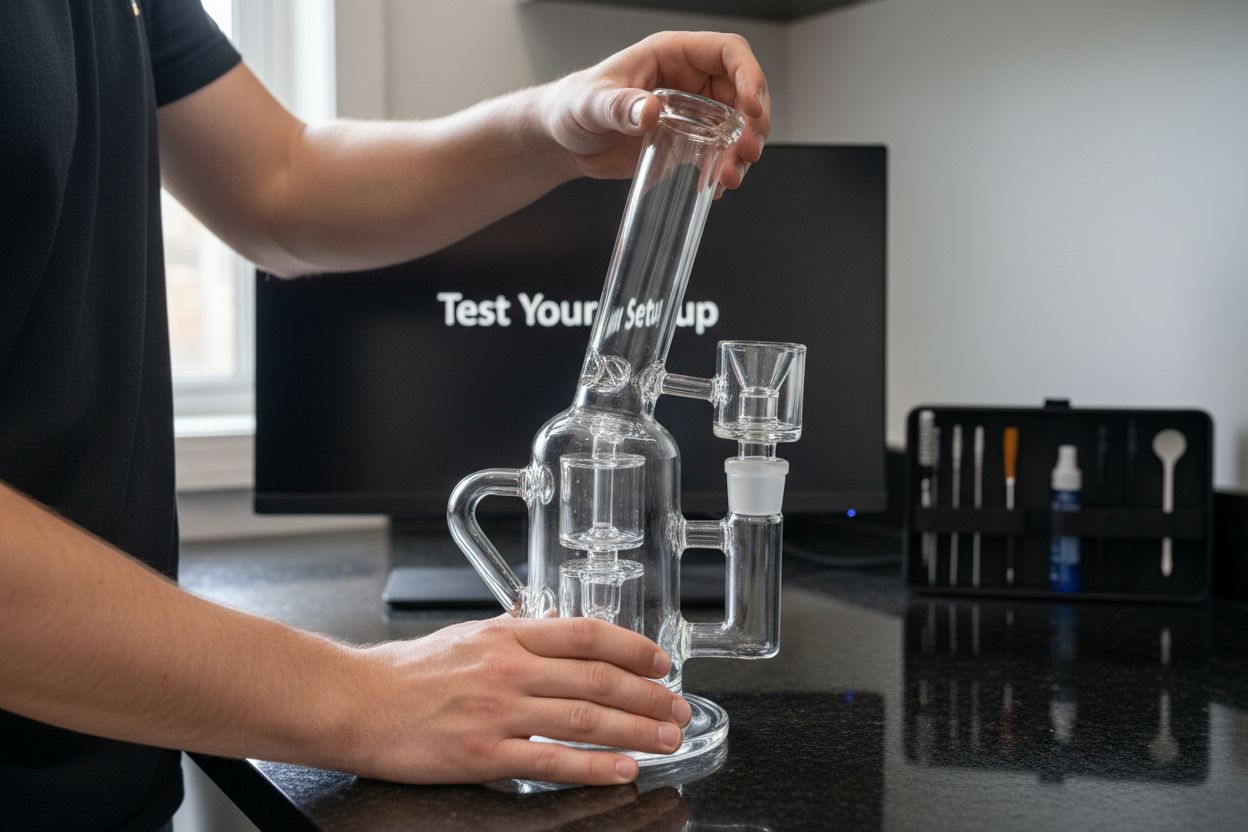 Place the bong on a stable surface and observe its balance. Gently simulate inhaling motions to confirm everything remains secure. A well-tested setup feels intuitive and responsive – it should almost disappear into the background of your smoking experience, allowing you to focus on enjoyment rather than equipment management. Remember, patience during this testing phase prevents potential disappointments during your actual smoking session.
Ready to Personalize Your Bong Setup for the Ultimate Session?
Are you tired of awkward fits, harsh hits, and limited options holding back your smoking experience? This article showed how using the right bong accessories can elevate every session—helping you get smoother draws, cleaner hits, and true personalization. But finding compatible accessories, quality glass, and trusted advice is not always easy. If you want to match your downstem, bowl, or ash catcher perfectly or just need to upgrade your setup, you deserve a shop with real variety and support.
Discover everything you need in one trusted hub. At It’s 4:20 Somewhere, you’ll find high-quality glass bongs, affordable parts, and a standout selection of bong accessories to fit any need. Bring your knowledge from this article into action and explore real solutions plus honest reviews and fast shipping. Stop settling for guesswork or one-size-fits-all gear. Upgrade your experience now—visit It’s 4:20 Somewhere and build your perfect bong today.
Frequently Asked Questions
What are the essential accessories needed for using a bong?
A clean bong, compatible downstem, glass bowl, screens, and possibly an ash catcher are essential accessories to enhance your smoking experience.
How do I properly prepare my bong before using it?
Begin by cleaning all components, ensuring fresh filtered water fills the chamber about one inch above the downstem, and checking for structural integrity of the glass parts.
What is the purpose of an ash catcher when using a bong?
An ash catcher traps ash and resin before they can enter the main bong chamber, helping to maintain cleanliness and preserve the quality of your hits.
How do I determine the correct water level for my bong?
The optimal water level is typically about one inch above the downstem’s bottom opening. This allows for effective filtration while preventing splash-back during inhalation.
Recommended
- What is a Bong? A Complete Guide to Bongs – It’s 4:20 Somewhere
- Understanding Glass Pipes Explained: A Comprehensive Guide – It’s 4:20 Somewhere
- Antidote Glass | 17" Bent Neck Beaker Water Pipe – Comfort Meets Innovation | The Ultimate Smoking Experience – It’s 4:20 Somewhere
- 420? Below | Clear Gathered 14mm Glass Funnel Bowl w/ Handle | Perfect for an Effortless Smoke Session – It’s 4:20 Somewhere

Bong Materials Explained: Understanding Your Options
Everyone talks about the shape or color of bongs, but the real difference comes from what they’re made of. Most smokers pick glass for their piece, yet borosilicate glass can withstand extreme temperature changes that would crack ordinary glass in seconds. Surprised? Silicone bongs can actually survive being dropped down a flight of stairs, while some plastics may leak chemicals when heated. The best part is how your choice of material can change everything—from flavor to durability—shaping each session more than you’d think.
Table of Contents
- What Are The Common Materials Used For Bongs?
- Why Material Choice Matters In Bong Functionality
- How Different Materials Impact Smoking Experience
- Comparing Durability And Maintenance Of Bong Materials
- Exploring Aesthetics And Design In Bong Materials
Quick Summary
| Takeaway | Explanation |
|---|---|
| Glass is the best material for bongs. | Borosilicate glass offers superior thermal resistance, easy maintenance, and pure flavor preservation, making it the top choice for smoking. |
| Silicone provides excellent durability and portability. | Silicone bongs are nearly indestructible, making them ideal for travel without sacrificing smoking quality. |
| Ceramic bongs promote aesthetic appeal. | Ceramic offers artistic designs and excellent heat retention, appealing to those who value aesthetics in their smoking experience. |
| Material choice impacts health and safety. | Non-porous materials reduce bacterial growth and chemical contamination, ensuring a safer smoking experience. |
| Cleaning varies by material type. | Glass and ceramic are easy to clean, while plastic tends to absorb odors, requiring more effort to maintain hygiene. |
What Are the Common Materials Used for Bongs?
Selecting the right material for your bong is crucial for ensuring an optimal smoking experience. Different materials offer unique characteristics that impact flavor, durability, maintenance, and overall performance. Our comprehensive guide on bong types explores these nuances in greater depth.
Glass: The Gold Standard
Borosilicate glass remains the most popular and respected material for bong construction. According to scientific research, this specialized glass offers exceptional thermal resistance and chemical stability, making it ideal for smoking apparatus. Glass bongs provide several key advantages:
- Crystal clear visual aesthetics
- Easy to clean and maintain
- Neutral flavor preservation
- Ability to withstand high temperatures
- Resistance to thermal shock
The transparency of glass also allows smokers to observe water filtration and smoke progression, enhancing the overall experience.
Alternative Materials: Diversity in Design
While glass dominates the market, alternative materials have gained significant popularity. Silicone bongs, for instance, offer remarkable durability and flexibility. Ceramic bongs provide artistic designs and excellent heat retention. Acrylic and plastic options present budget-friendly alternatives with lightweight construction.
Each material brings unique properties to the smoking experience. Silicone bongs are virtually unbreakable and perfect for travel. Ceramic pieces often feature intricate artisan designs. Acrylic models offer affordability without compromising fundamental functionality.
The choice ultimately depends on personal preference, budget, and intended use. Whether you prioritize aesthetic appeal, portability, or pure smoking performance, understanding material characteristics helps you make an informed decision.
The table below compares the primary bong materials mentioned in the article, summarizing their strengths, weaknesses, and unique features for an easy side-by-side overview.
| Material | Advantages | Disadvantages | Unique Features |
|---|---|---|---|
| Borosilicate Glass | Excellent flavor, easy to clean, thermal-resistant | Fragile, less portable | Chemically inert, transparent |
| Silicone | Nearly indestructible, portable, flexible | May affect taste slightly | Dishwasher-safe, unbreakable |
| Ceramic | Excellent heat retention, artistic designs | Heavier, can break if dropped | Hand-painted finishes, earthy aesthetics |
| Acrylic/Plastic | Affordable, lightweight | May absorb smells, harder to clean, leaching | Budget-friendly, wide color options |
Why Material Choice Matters in Bong Functionality
The material of your bong is far more than an aesthetic choice. It fundamentally impacts the smoking experience, performance, health considerations, and long-term usability. Explore our guide to finding the best bong material to make an informed decision.
Thermal Properties and Smoke Quality
Different materials interact with heat and smoke in unique ways. According to scientific research, the material directly influences smoke temperature, filtration efficiency, and potential chemical interactions. Critical thermal considerations include:
- Heat retention capabilities
- Thermal shock resistance
- Cooling efficiency
- Potential for chemical leaching
- Temperature transfer rates
Borosilicate glass, for instance, offers superior thermal stability, preventing unwanted chemical reactions and maintaining consistent smoke quality.
Health and Safety Implications
The bong material plays a crucial role in ensuring a safe smoking experience. Non-porous materials like glass and high-grade ceramics prevent bacterial growth and chemical contamination. Cheaper materials such as low-quality plastics can potentially release harmful compounds when exposed to high temperatures.
Key safety factors include material porosity, chemical inertness, and potential toxin release. Glass and medical-grade silicone represent some of the safest options, providing a neutral smoking environment without introducing additional chemical compounds.
Ultimately, your material choice impacts not just the aesthetic and immediate smoking experience, but also long-term health considerations. Investing in a high-quality, chemically stable bong material ensures a cleaner, safer, and more enjoyable smoking session.
How Different Materials Impact Smoking Experience
Every bong material brings a unique set of characteristics that dramatically transforms your smoking session. Explore our comprehensive bong water alternatives guide to further enhance your experience.
Flavor Preservation and Smoke Purity
According to scientific research, material selection critically influences smoke flavor and quality. Different materials interact with smoke in profoundly different ways, affecting taste, temperature, and overall smoothness. Key flavor considerations include:
- Potential for chemical leaching
- Neutrality of material surface
- Heat transfer properties
- Potential taste contamination
- Smoke cooling efficiency
Borosilicate glass remains the gold standard for preserving pure, unadulterated smoke flavor. Its chemically inert surface ensures that no additional flavors or compounds are introduced during the smoking process.
Temperature Control and Smoke Dynamics
Material composition directly impacts smoke temperature and filtration. Ceramic and glass materials offer superior heat dissipation, creating smoother, cooler hits. Silicone and plastic bongs, while more flexible, may retain heat differently, potentially altering the smoking experience.
Heat interaction varies significantly across materials. Glass provides rapid cooling, creating a crisp, clean inhalation. Ceramic retains heat longer, offering a more gradual temperature reduction. These nuanced differences can dramatically transform how you experience each smoking session.
Ultimately, your material choice is a personal journey of balancing performance, flavor, durability, and individual preference. Understanding these subtle yet significant variations helps you select a bong that perfectly matches your smoking style and sensory expectations.
Comparing Durability and Maintenance of Bong Materials
The longevity and ease of care for your bong are as crucial as its smoking performance. Check out our guide to essential bong accessories to maximize your equipment’s lifespan.
Material Resilience and Break Resistance
According to scientific analysis, different bong materials exhibit dramatically varied durability characteristics. Each material presents unique strengths and potential vulnerabilities. Key durability factors include:
- Impact resistance
- Temperature tolerance
- Structural integrity
- Resistance to chemical degradation
- Long-term wear and tear potential
Silicone and high-grade borosilicate glass represent the most resilient materials. Silicone offers near-indestructible flexibility, while borosilicate glass provides superior thermal and mechanical shock resistance.
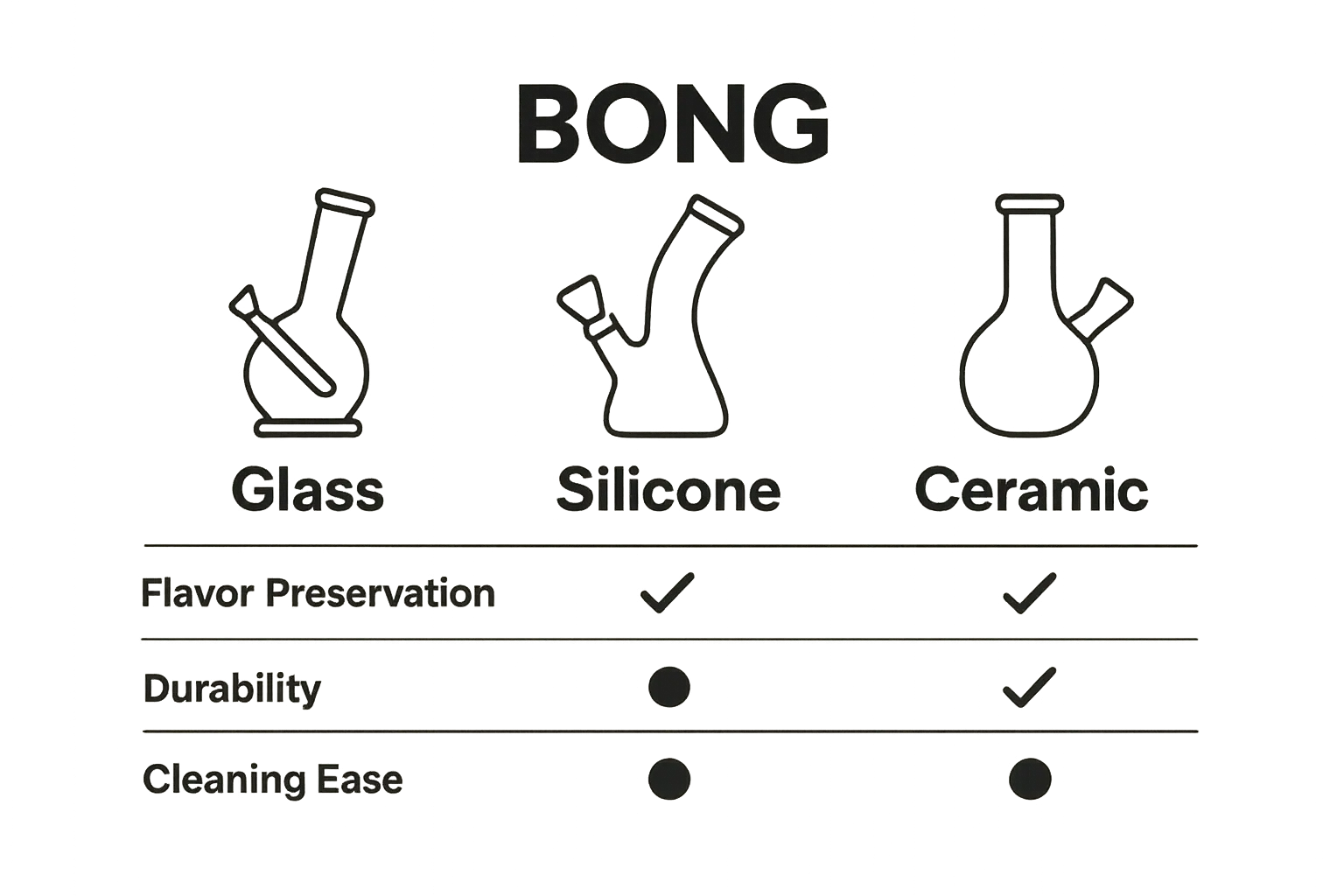
Cleaning and Long-Term Maintenance
Maintenance requirements vary significantly across different bong materials. Glass and ceramic surfaces are remarkably easy to clean, allowing thorough removal of resin and mineral buildup. Silicone bongs offer unprecedented convenience, often being dishwasher-safe and resistant to stubborn residues.
Plastic and lower-quality materials tend to absorb odors and stains more readily, making comprehensive cleaning substantially more challenging. Porous surfaces create ideal environments for bacterial growth and persistent residue accumulation.
Your material choice directly influences not just immediate smoking experience, but long-term investment in your smoking equipment. Prioritizing durability and ease of maintenance ensures a consistently enjoyable and hygienic smoking experience.
This table summarizes how different bong materials affect smoke quality, durability, cleaning, and safety to help you quickly see their practical impacts and maintenance needs.
| Material | Smoke Quality & Flavor | Durability | Ease of Cleaning | Health & Safety |
|---|---|---|---|---|
| Borosilicate Glass | Pure, neutral flavor | Moderate (fragile) | Easy (non-porous) | Chemically inert, safe |
| Silicone | Good, minor flavor change | Very high (flexible) | Very easy (dishwasher) | Safe if food-grade, non-porous |
| Ceramic | Good, retains heat | Moderate (breakable) | Easy | Safe (if glazed), non-porous |
| Acrylic/Plastic | Flavor may be affected | Moderate | More difficult | May leach chemicals, can absorb bacteria |
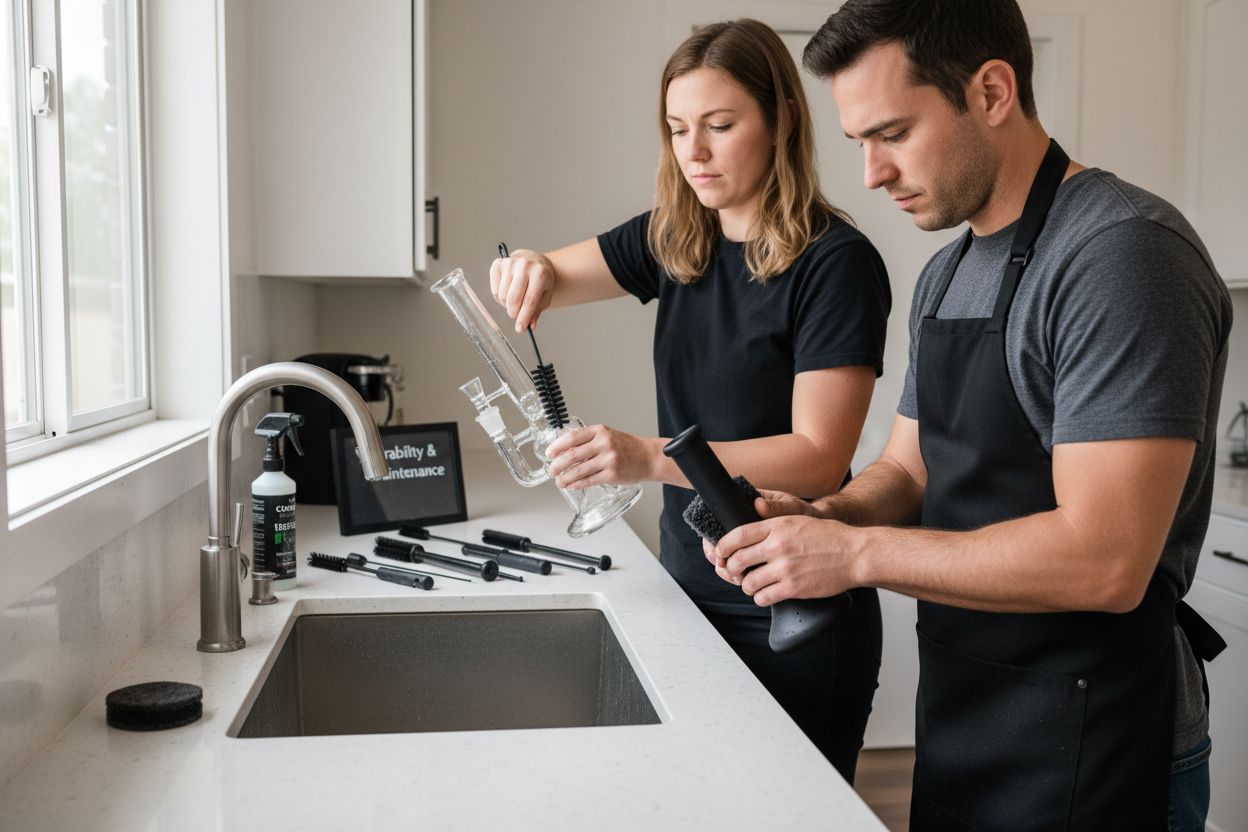
Exploring Aesthetics and Design in Bong Materials
Bong materials are not just functional tools but also artistic expressions of personal style and creativity. View our premium glass bong collection to see stunning design possibilities.
Artistic Expression Through Material
According to scientific research, different bong materials offer unique artistic potential. Each material provides distinct design opportunities that reflect both aesthetic preferences and functional requirements. Key design considerations include:
- Color variability
- Transparency levels
- Surface texture potential
- Molding and shaping capabilities
- Complexity of potential designs
Glass remains the premier material for intricate artistic designs, allowing for complex shapes, vibrant colors, and detailed sculptural elements through specialized glassblowing techniques.
Material Aesthetic Characteristics
Each bong material communicates a different visual and tactile experience. Borosilicate glass offers crystal clarity and the ability to showcase complex internal percolation designs. Ceramic provides a more traditional, earthy aesthetic with opportunities for hand-painted or glazed finishes. Silicone bongs present a modern, minimalist approach with bold color options and rugged texture.
The aesthetic choice extends beyond mere appearance. Your selected material reflects personal style, from classic glass collectors pieces to contemporary silicone designs that prioritize practicality and portability. The visual language of your bong becomes an extension of your personal smoking ritual and aesthetic sensibility.
Discover the Perfect Bong Material for Your Lifestyle
Choosing between glass, silicone, or ceramic bongs can feel overwhelming, especially when each material impacts flavor, durability, and ease of cleaning. If the article on bong materials helped you understand the differences, but you are still unsure which one fits your goals, you are not alone. Many smokers want the best balance of pure taste, easy maintenance, and a design that lasts.
At It’s 4:20 Somewhere, you can turn those insights into action. Our curated collections include everything from premium glass bongs to nearly indestructible silicone options. Browse detailed product pages, customer reviews, and exclusive blog content to find a setup that matches your exact needs. Visit https://its420somewhere.com now to upgrade your session and enjoy fast, discreet shipping on your perfect bong choice.
Frequently Asked Questions
What are the key materials used for bongs?
The most common materials used for bongs include borosilicate glass, silicone, ceramic, acrylic, and plastic. Each material offers distinct advantages in terms of durability, flavor preservation, and overall smoking experience.
How does the material of a bong affect smoke quality?
The material of a bong influences smoke quality by impacting temperature, filtration efficiency, and potential chemical interactions. Borosilicate glass is known for preserving pure flavor and preventing chemical leaching, while other materials may alter taste or retain heat differently.
Are silicone bongs a good option for durability?
Yes, silicone bongs are highly durable and virtually unbreakable, making them an excellent choice for portable use and travel. They offer flexibility and resilience compared to traditional glass options.
How do I properly clean different bong materials?
Cleaning requirements vary by material. Borosilicate glass and ceramic are easy to clean, while silicone is often dishwasher-safe. Plastic and lower-quality materials can absorb odors and stains, making thorough cleaning more challenging.
Recommended
- What is a Bong? A Complete Guide to Bongs – It’s 4:20 Somewhere
- 9 Must-Have Bong Accessories for Every Enthusiast – It’s 4:20 Somewhere
- 420? Below | Clear Gathered 14mm Glass Funnel Bowl w/ Handle | Perfect for an Effortless Smoke Session – It’s 4:20 Somewhere
- GRAV | 14mm Male Basin Bowl – Assorted Colors | Spice Up Your Smoking Session – It’s 4:20 Somewhere

Bong Maintenance Explained: Keeping Your Piece Pristine
Keeping your bong clean has a huge effect on both your health and how good your smoke session feels. Most people are shocked to learn that a neglected bong can harbor more bacteria and dangerous mold than your kitchen sponge and that dirty water means every puff could be full of hidden microbes and tar. The unexpected truth is that research shows residue inside bongs increases exposure to toxic compounds and pathogens way beyond what you might imagine from a little discoloration or buildup.
Table of Contents
Quick Summary
| Takeaway | Explanation |
| Regular maintenance prevents health risks | Neglecting bong care can lead to harmful bacteria and fungi, increasing health hazards during use. |
| Cleaning enhances smoking experience | Proper cleaning ensures smoother hits and preserves flavor, significantly improving your overall enjoyment. |
| Different materials require specific care | Each bong component responds uniquely to cleaning methods, making tailored approaches essential for maintenance. |
| Prevent long-term damage with routine care | Regular cleaning prevents minor issues from escalating into costly repairs or equipment failure. |
| Utilize effective cleaning techniques | Employ chemical and mechanical cleaning methods tailored to your bong’s materials for optimal results. |
Understanding the Importance of Bong Maintenance
Bong maintenance is far more than a cosmetic concern. It directly impacts your smoking experience, health, and the longevity of your smoking apparatus. Proper care ensures cleaner, smoother hits, prevents resin buildup, and reduces potential respiratory risks associated with dirty smoking equipment.
The Health Implications of Neglected Bongs
A poorly maintained bong can become a breeding ground for harmful microorganisms. Research from the National Institutes of Health highlights that residue accumulation inside smoking devices increases exposure to toxic compounds and potential pathogens. The organic material trapped in bong resin can harbor:
-
Bacteria that thrive in moist, dark environments
-
Fungal spores that can multiply rapidly
-
Tar and carbon deposits that degrade smoke quality
Performance and Flavor Preservation
Regular maintenance isn’t just about hygiene—it’s about preserving the optimal smoking experience. Resin buildup creates multiple negative consequences:
-
Reduced airflow through your piece
-
Diminished flavor profiles of your herb
-
Increased drag and resistance when inhaling
By investing time in proper cleaning and care, you protect both your health and your smoking equipment. Think of bong maintenance like maintaining a high-performance vehicle: consistent care ensures peak performance and extended lifespan.
The process of maintaining your bong goes beyond simple cleanliness. It represents a commitment to your personal health, the quality of your smoking sessions, and respect for the craftsmanship of your smoking apparatus. Whether you own a simple glass piece or a sophisticated water pipe, understanding and implementing proper maintenance techniques will transform your entire smoking experience.
Core Components of a Bong and Their Care
Understanding the anatomy of a bong is crucial for effective maintenance. Each component plays a unique role in filtering, cooling, and delivering smooth smoke, making targeted care essential for preserving your smoking experience.
The Critical Glass Components
Glass components form the backbone of most high-quality bongs. These delicate pieces require specialized attention to maintain their integrity and performance. Research from glass manufacturing experts indicates that different glass types respond uniquely to cleaning techniques.
Key glass components include:
-
Bowl: The entry point for your herb, directly exposed to flame and highest temperature stress
-
Downstem: A critical filtration tube connecting the bowl to the water chamber
-
Water Chamber: The primary smoke cooling and initial filtration zone
Resin and Material Interactions
Each bong component accumulates resin differently, necessitating nuanced cleaning approaches. Resin buildup isn’t just unsightly—it fundamentally alters smoke quality and potentially damages your piece. Organic residues interact with glass, ceramic, and silicone materials in complex ways, creating potential long-term degradation risks.
Material-specific maintenance considerations include:
-
Glass requires gentle, non-abrasive cleaning to prevent microscopic scratches
-
Silicone components can withstand more aggressive cleaning techniques
-
Ceramic pieces demand careful handling to prevent structural weakening
By understanding these intricate interactions, you can develop a targeted maintenance strategy that preserves your smoking accessories. Proper care isn’t just about cleanliness—it’s about respecting the engineering and craftsmanship behind each smoking instrument.
Remember that your bong is more than a smoking device. It’s a precision instrument designed to deliver a refined, enjoyable experience. Treating each component with knowledge and care ensures optimal performance, longevity, and most importantly, a consistently smooth smoking session.

Common Issues From Poor Maintenance and Their Impact
Neglecting bong maintenance isn’t just about aesthetic degradation—it introduces significant health risks and performance limitations that can dramatically compromise your smoking experience. Understanding these potential complications provides critical motivation for consistent, thorough cleaning practices.
Respiratory and Health Complications
Research from the Harm Reduction Journal demonstrates that poorly maintained smoking devices can become dangerous breeding grounds for harmful microorganisms. Uncleaned bongs can develop complex health risks, including:
-
Bacterial proliferation in stagnant water and resin deposits
-
Potential fungal growth in moist, dark bong chambers
-
Increased exposure to carcinogenic tar and residual combustion materials
Performance Degradation and Structural Risks
Beyond health concerns, poor maintenance introduces substantial performance challenges. Resin accumulation and neglect can cause:
-
Significant reduction in smoke filtration efficiency
-
Increased resistance and difficult airflow
-
Potential microscopic glass or material degradation
-
Permanent staining and aesthetic damage to your smoking accessories
Long-Term Equipment Damage
Consistent neglect transforms minor maintenance issues into expensive equipment failures. Resin buildup acts like a corrosive agent, gradually breaking down intricate glass structures and compromising the fundamental integrity of your smoking device. What begins as a thin layer of residue can progressively transform into a complex network of hardened organic material that fundamentally alters your bong’s performance.
Think of bong maintenance as preventative healthcare for your smoking equipment. Just as regular medical check-ups prevent serious health complications, routine cleaning prevents catastrophic equipment failure. Your investment in a quality bong deserves equally committed maintenance.
Exploring Different Cleaning Techniques and Their Efficacy
Bong cleaning is a nuanced process that requires understanding the unique properties of different materials, resin compositions, and cleaning solutions. No single approach works universally, making technique selection critical for preserving your smoking apparatus.
Chemical and Solution-Based Approaches
Research published in microbiological studies demonstrates that alcohol-based solutions effectively dissolve organic residues and reduce bacterial contamination. Different cleaning solutions offer varied advantages:
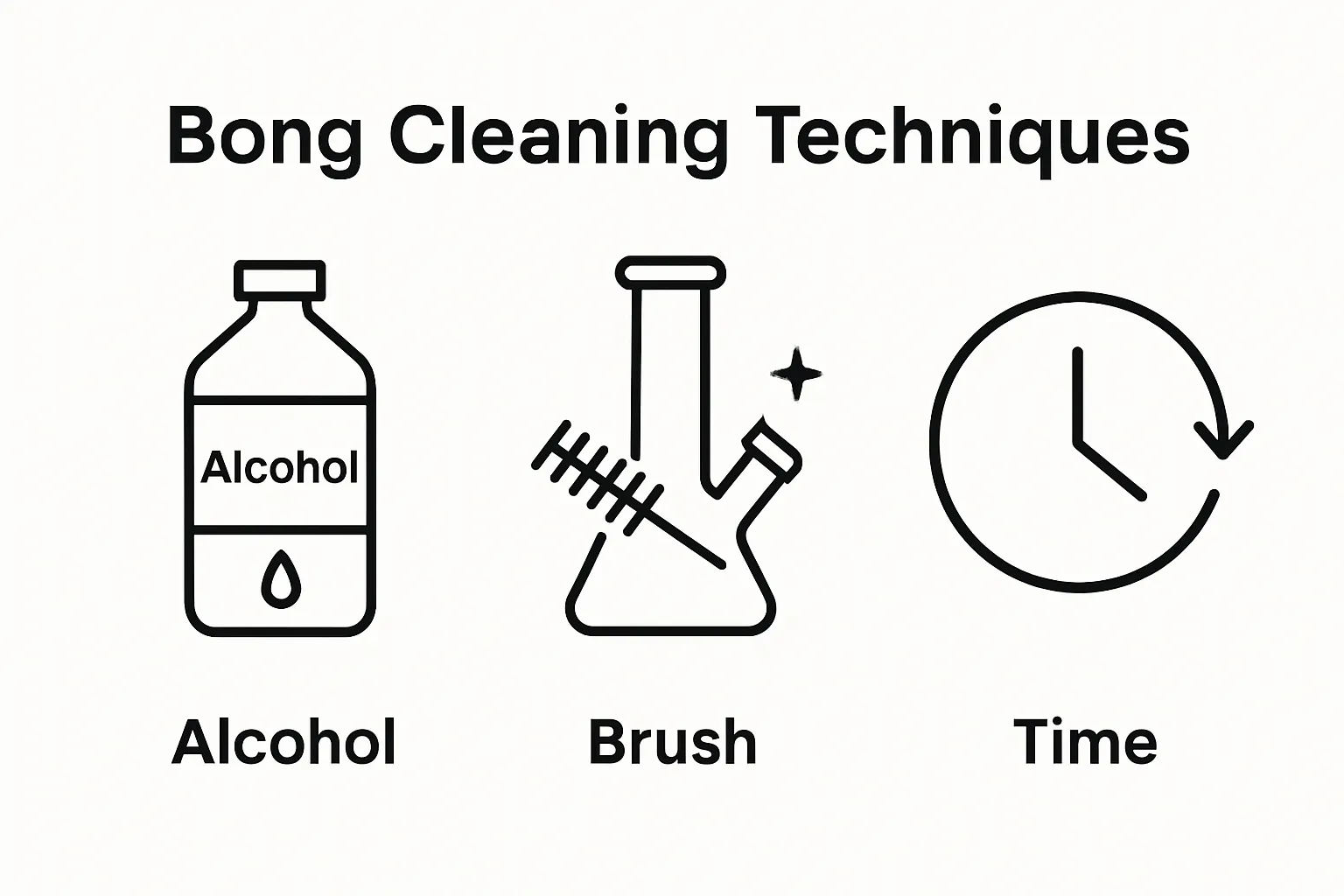
-
Isopropyl Alcohol: Rapid solvent with exceptional degreasing properties
-
Specialized Glass Cleaners: Formulated for delicate glass surfaces
-
Enzymatic Cleaners: Break down organic matter without harsh chemicals
Material-Specific Cleaning Considerations
Each bong material demands a tailored maintenance strategy. Glass, silicone, ceramic, and acrylic pieces respond differently to cleaning agents, requiring nuanced approaches to prevent potential damage.
Below is a comparison table outlining the most common bong cleaning techniques and their distinct features, helping you identify the most suitable method based on your needs.
| Cleaning Technique | Key Benefits | Materials Suitable For | Special Considerations |
| Isopropyl Alcohol | Rapid resin and bacteria removal | Glass, silicone | Not ideal for acrylic or painted parts |
| Specialized Glass Cleaners | Gentle on delicate surfaces | Glass | Designed for precision and clarity |
| Enzymatic Cleaners | Breaks down organic matter safely | Glass, ceramic, silicone | Free from harsh chemicals |
| Mechanical Tools (brushes) | Effective for stubborn buildup | Most materials except acrylic | Avoid abrasive brushes on glass |
| Pipe Cleaners | Detailed cleaning in tight areas | Glass, ceramic | Dispose after single use |
Key material cleaning principles include:
-
Avoiding abrasive materials that could scratch surfaces
-
Selecting pH-neutral cleaning solutions
-
Understanding temperature tolerances for each material type
Mechanical Cleaning Techniques
Beyond chemical solutions, mechanical cleaning techniques play a crucial role in comprehensive bong maintenance. Specialized tools like pipe cleaners, soft brushes, and non-abrasive scrubbers help dislodge stubborn resin without causing microscopic damage. The goal isn’t just removing visible residue—it’s creating a pristine internal environment that preserves your smoking experience’s quality and purity.
Effective bong maintenance transcends simple cleanliness. It represents a commitment to your health, equipment longevity, and the fundamental enjoyment of your smoking ritual. By approaching cleaning as a sophisticated process rather than a mundane chore, you elevate your entire smoking experience.
Upgrade Your Bong Maintenance with Premium Solutions
Tired of fighting stubborn resin and worrying about lingering bacteria every time you clean your bong? The struggle to maintain peak performance and safeguard your health is real. As discussed in our article, poor maintenance leads to clogged airflow, degraded flavor, and even serious health risks from hidden buildup. You deserve a smoother smoking experience and equipment that always works like new.
Refresh your setup and eliminate hassle at It’s 4:20 Somewhere. Explore our vast collection of bongs and smoking accessories for every style and budget. Find durable glass pieces, easy-to-clean silicone bongs, and the must-have bong accessories that make maintenance effortless. Ready to protect your investment and enjoy pristine sessions every time? Visit us now and shop with confidence.
Frequently Asked Questions
What are the health risks associated with not maintaining my bong?
Neglecting bong maintenance can lead to the accumulation of harmful microorganisms, including bacteria and fungi, which thrive in moist environments. This can increase your exposure to toxic compounds and potential respiratory risks.
How does resin buildup affect my smoking experience?
Resin buildup can reduce airflow, hinder smoke filtration, and diminish flavor profiles, leading to a less enjoyable smoking experience. Regular cleaning helps preserve the quality of your herb and ensures smoother hits.
What are the best cleaning solutions for my bong?
Isopropyl alcohol is highly effective at dissolving organic residues, while specialized glass cleaners are designed for delicate surfaces. Enzymatic cleaners break down organic matter without harsh chemicals, offering a safe alternative.
How often should I clean my bong to maintain its performance?
To maintain optimal performance and hygiene, it’s recommended to clean your bong after every use or at least once a week, depending on how frequently you smoke. Regular maintenance prevents the buildup of resin and ensures smoother smoking sessions.
Recommended

How to Replace Bong Accessories for Optimal Use
Upgrading your bong can feel overwhelming with all the delicate parts and precise fittings. Most people do not realize that a single misstep, like mismatching joint sizes, can cost them their favorite piece. But here is something that might surprise you. One study found that over 60 percent of bong repairs fail due to incompatible accessories or rushed replacements. There is a smarter way to do this and it starts with proper prep and careful steps you probably have not tried yet.
Table of Contents
- Step 1: Gather Necessary Replacement Accessories
- Step 2: Disassemble Your Bong Carefully
- Step 3: Replace The Old Accessories With New Ones
- Step 4: Reassemble The Bong Securely
- Step 5: Test For Airflow And Functionality
- Step 6: Clean And Maintain For Longevity
Quick Summary
| Key Point | Explanation |
|---|---|
| 1. Assess current bong condition. | Identify which accessories require replacement and take accurate measurements for compatibility to ensure successful upgrades. |
| 2. Use quality replacement parts. | Prioritize durable materials and check dimensions to avoid leaks and ensure proper function throughout the smoking experience. |
| 3. Handle disassembly with care. | Remove components gently to prevent damage, keeping track of each part to maintain order during reassembly. |
| 4. Test for air flow and leaks. | Conduct a dry run and water test after replacing parts to confirm proper installation and functionality of the new accessories. |
| 5. Establish a regular cleaning routine. | Clean bong parts after each use and inspect for wear, using isopropyl alcohol to preserve performance and extend longevity. |
Step 1: Gather Necessary Replacement Accessories
Replacing bong accessories requires strategic preparation and the right components to ensure a smooth upgrade process. Before diving into the replacement, you will need to collect specific tools and replacement parts that match your existing bong’s specifications and design.
First, assess the current condition of your bong and identify precisely which accessories need replacement. This might include downstems, bowls, ash catchers, percolators, or sealing rings. Carefully measure the existing parts to guarantee new accessories will fit correctly. Glass bongs typically require specific measurements like joint size (10mm, 14mm, or 18mm) and gender (male or female), which are critical for proper compatibility.
Your essential replacement toolkit should include:
- Rubbing alcohol for cleaning
- Soft cleaning cloths
- Precision measuring tape
- Replacement glass accessories matching original specifications
- Protective gloves
When selecting replacement parts, prioritize quality materials that match your original bong’s construction. Glass thickness, joint angles, and connection types play significant roles in determining a successful replacement. Cheaper alternatives might compromise your smoking experience or risk damaging your primary bong.
Smoking accessory experts recommend purchasing replacement parts from reputable manufacturers who provide precise measurements and compatibility guarantees. Avoid generic or unbranded accessories that could potentially create leaks or improper connections.
Thoroughly inspect each replacement part before installation. Look for any micro-cracks, uneven surfaces, or manufacturing imperfections that could impact performance. A careful visual examination can prevent potential issues during the replacement process and ensure a seamless upgrade to your smoking setup.
Here is a convenient table summarizing the essential tools and replacement materials discussed, including their specific purpose during the bong accessory replacement process.
| Tool/Material | Purpose | Notes |
|---|---|---|
| Rubbing alcohol | Clean and remove resin from parts | Use for pre-cleaning and deep cleaning |
| Soft cleaning cloths | Wipe and dry components without scratching | Lint-free recommended |
| Precision measuring tape | Measure joint size and accessory dimensions | Crucial for accurate accessory fitting |
| Replacement glass parts | Swap out worn or damaged accessories | Must match original specs and joint size |
| Protective gloves | Protect hands and provide extra grip | Reduces risk of dropping delicate pieces |
| Silicone-based lubricants | Ease installation of rubber grommets or seals | Prevents friction and micro-abrasions |
| Coarse salt | Assist with abrasive cleaning during maintenance | Combine with alcohol for best results |
Step 2: Disassemble Your Bong Carefully
Disassembling your bong is a critical step in replacing accessories, requiring precision and careful handling to prevent damage to delicate glass components. This process demands patience and methodical attention to maintain the integrity of your smoking apparatus.
Begin by clearing your workspace and creating a soft, stable surface covered with a clean towel or silicone mat. This protective layer will cushion your glass pieces and minimize the risk of accidental breakage. Remove all removable components starting with the bowl and downstem, holding these fragile parts by their sturdiest sections. Gently twist and pull these pieces, applying steady but minimal pressure to avoid cracking or chipping.
As you learn more about bong maintenance, understand that different joint connections might require slightly varied techniques. Water should be completely emptied before disassembly, and any resin or residue can be loosened with a pre-cleaning using isopropyl alcohol.
Pay special attention to rubber grommets and sealing rings, which can become brittle or compressed over time. These small but crucial components often need replacement to ensure airtight connections. Inspect each piece carefully for signs of wear, such as visible cracks, discoloration, or warping. When removing these seals, use your fingers to gently work them loose rather than using metal tools that could cause unnecessary damage.
Your disassembly checklist should include:
- Removing bowl piece
- Extracting downstem
- Checking and removing rubber seals
- Inspecting glass for any existing damage
Work systematically and avoid rushing. Place each removed component in a safe, designated area to prevent misplacement or accidental breakage. By maintaining a calm and careful approach, you minimize the risk of damaging your bong during the accessory replacement process.
Step 3: Replace the Old Accessories with New Ones
Replacing bong accessories requires precision and careful alignment to ensure optimal performance and prevent potential damage. This critical step transforms your smoking experience by introducing fresh, high-quality components that restore functionality and enhance overall smoking quality.
Joint compatibility represents the most crucial factor during replacement. Carefully align new accessories with the exact measurements of your existing bong, paying close attention to joint size and gender. A 14mm male bowl, for instance, must precisely match a 14mm female joint to create a seamless connection. Forcing mismatched accessories can result in cracks, air leaks, or complete structural failure.
Begin by dry fitting each new accessory before applying any lubricants or sealants. Gently insert the new downstem, bowl, or percolator, checking for smooth movement and consistent alignment. Silicone-based lubricants can help create smoother connections for rubber grommets and sealing rings, reducing friction and preventing potential micro-abrasions.
When inserting glass components, use a light, twisting motion to ensure even pressure distribution. Avoid aggressive pushing or forcing, which can cause unexpected stress points that might lead to fractures. For accessories like ash catchers or additional percolators, verify that the weight distribution remains balanced and does not create undue strain on the main bong structure.
Key verification points for successful replacement include:
- Tight, leak-free connections
- Smooth joint movement
- No visible gaps between accessories
- Consistent angle and alignment
Smoking accessory experts recommend performing a preliminary water test after installation. Fill the bong with a small amount of water and gently tilt to check for any unexpected leaks or loose connections. This final assessment ensures your new accessories are correctly integrated and ready for an optimal smoking experience.
Step 4: Reassemble the Bong Securely
Reassembling your bong after replacing accessories demands meticulous attention to detail and a gentle touch. This crucial step transforms your individual components back into a functional smoking apparatus, ensuring each piece connects seamlessly and securely.
Precision is paramount when reconnecting your bong’s components. Start by aligning each piece carefully, using the original orientation as a guide. Gently insert the new downstem into the joint, applying light, even pressure to prevent stress on the glass. Rubber grommets and sealing rings play a critical role in creating airtight connections, so ensure they are positioned correctly and not twisted or compressed.
Learn more about proper bong maintenance to understand the nuanced techniques of reassembly. The process requires a delicate balance between securing components firmly and avoiding excessive force that could compromise your glass pieces. Rotate each accessory with a slight twisting motion, allowing it to settle naturally into its intended position.
Pay special attention to the water chamber and joint connections. Verify that all accessories sit flush and create a smooth, uninterrupted pathway. Any misalignment can impact airflow and overall smoking performance. If you encounter resistance while reconnecting parts, pause and reassess rather than applying additional pressure.
Your final reassembly checklist should include:
- Confirming all components are properly seated
- Checking for smooth joint movement
- Verifying no visible gaps or misalignments
- Testing initial air resistance
According to smoking accessory experts, a successful reassembly should feel natural and effortless. The bong should stand stable, with each new accessory integrated seamlessly. Perform a gentle dry test by breathing through the mouthpiece to ensure unrestricted airflow before adding water. This final verification step guarantees your bong is ready for an optimal smoking experience.
Step 5: Test for Airflow and Functionality
Testing your newly reassembled bong is a critical final step that ensures all replacement accessories function perfectly and provide the optimal smoking experience. This comprehensive evaluation helps identify any potential issues before your first use, preventing potential frustration or equipment damage.
Airflow testing begins with a dry run, which means examining the bong’s breathing resistance without water. Place your mouth on the mouthpiece and gently draw air through the piece, paying close attention to the smoothness and consistency of air movement. Resistance should be moderate and uniform, indicating properly seated accessories and unobstructed pathways. Any unusual whistling, extreme difficulty breathing, or inconsistent airflow suggests a potential misalignment that requires readjustment.
Next, carefully add water to the chamber, filling it to the recommended level indicated by your specific bong design. Explore our comprehensive bong usage guide to understand optimal water levels for different bong styles. Tilt the bong gently from side to side, observing how water moves through the new percolators or diffusion chambers. Smooth water movement indicates proper installation and functionality of your newly replaced accessories.
Conducting a comprehensive functionality test involves several key observations:
- Checking for air leaks around joint connections
- Verifying smooth rotation of removable parts
- Ensuring consistent water filtration
- Listening for unusual sounds during airflow
According to smoking accessory experts, minor adjustments might be necessary after initial testing. Do not be discouraged if everything is not perfect immediately. Gentle repositioning of accessories or slight reseating can often resolve minor performance issues.
Below is a troubleshooting table outlining common bong accessory replacement problems, their possible causes, and recommended solutions as discussed in the guide.
| Problem | Possible Cause | Solution |
|---|---|---|
| Air leaks at joint | Incompatible joint size/gender | Re-measure and select correct matching part |
| Loose connection | Worn or improperly seated seals | Replace grommet/sealing ring; reseat part |
| Difficulty inserting accessory | Misalignment or residue in joint | Clean joint; gently realign and insert |
| Unusual whistling sounds | Gaps or cracks in connections | Inspect for damage; adjust or replace parts |
| Water not filtering properly | Incorrect installation or blockage | Reinstall accessories; clear any obstruction |
| Glass cracking during setup | Excessive force/mismatched connection | Stop, reassess fit, and use gentle motion |
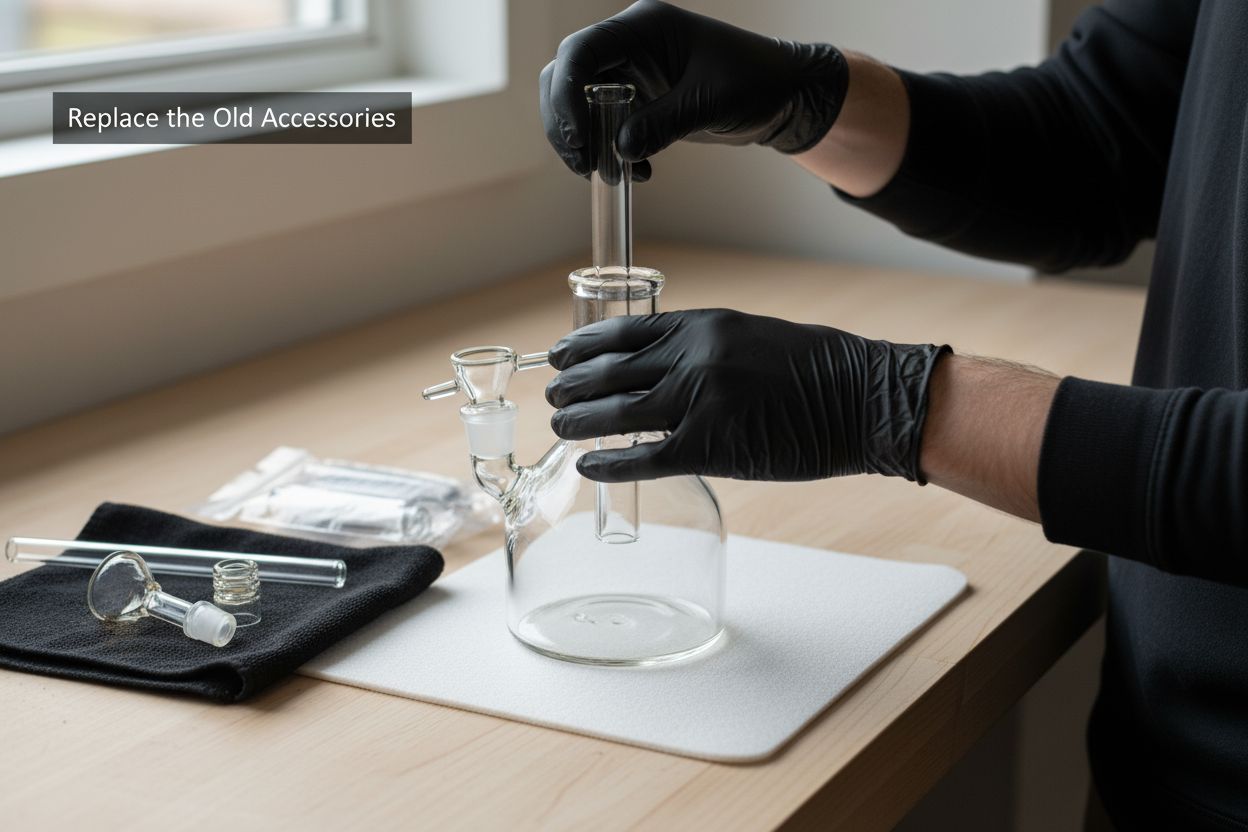
Step 6: Clean and Maintain for Longevity
Maintaining your newly upgraded bong requires consistent care and strategic cleaning techniques that preserve both functionality and aesthetic quality. Proper maintenance extends the life of your accessories and ensures optimal performance with each smoking session.
Regular cleaning prevents resin buildup and potential degradation of your glass components. Begin by disassembling all removable parts after each use, rinsing them with warm water to remove initial residue. For deeper cleaning, isopropyl alcohol serves as the most effective solution, breaking down stubborn resin and eliminating bacterial growth. Soak individual components in a mixture of alcohol and coarse salt, which acts as a gentle abrasive to scrub away accumulated grime.
Explore our comprehensive bong maintenance techniques to understand the nuanced approach to preserving your smoking apparatus. Different materials require specific care strategies. Glass accessories, for instance, demand more delicate handling compared to silicone components. Use soft, lint-free cloths and specialized glass cleaning tools to avoid scratching or damaging your newly installed accessories.
Establish a consistent cleaning routine that includes:
- Immediate rinse after each use
- Weekly deep cleaning with alcohol solution
- Careful drying of all components
- Inspection for potential micro-cracks or wear
According to smoking accessory experts, environmental factors significantly impact bong longevity. Store your bong in a cool, dry place away from direct sunlight and extreme temperature fluctuations. Use protective cases or padded storage solutions to minimize the risk of accidental damage. Rubber grommets and sealing rings should be periodically replaced to maintain airtight connections and prevent potential air leaks that could compromise your smoking experience.
Ready to Replace Your Bong Accessories With Confidence?
Struggling with leaky joints, difficult assembly, or outdated bong parts can quickly ruin your smoking sessions. If you want secure fits, smooth airflow, and reliable performance every time, choosing the right replacements is crucial. In this guide, you’ve learned the importance of careful measurement, joint compatibility, and regular cleaning for longevity. But finding the exact accessories to match your bong and knowing where to trust your investment is often the hardest step.
Now is the perfect time to upgrade your setup with top-tier downstems, bowls, ash catchers, or any other essential accessory from It’s 4:20 Somewhere. Enjoy a huge selection of specialized bong accessories designed to fit virtually every style and specification. Each product description includes vital details so you can match joint size and material with confidence, just as discussed in the article. Don’t settle for generic replacements or unreliable sources. Take the hassle and guesswork out of your next replacement—visit It’s 4:20 Somewhere and experience better function, durability, and fast shipping. Start personalizing your perfect setup now.
Frequently Asked Questions
How do I know which bong accessories need to be replaced?
Inspect your bong regularly for signs of wear, such as cracks, discoloration, or loss of airtight seals. Common accessories that often need replacement include downstems, bowls, and rubber grommets.
What measurements are essential for replacing bong accessories?
You should measure the joint size (10mm, 14mm, or 18mm) and gender (male or female) of your bong to ensure compatibility with the new accessories you choose.
How can I ensure a tight and leak-free connection when replacing accessories?
Make sure to align the new accessories properly with your bong’s joint. Use silicone-based lubricants if needed and avoid applying excessive force to prevent fractures or air leaks.
What cleaning routine should I follow after replacing bong accessories?
After each use, rinse each component with warm water. For deep cleaning, soak them in isopropyl alcohol mixed with coarse salt weekly to eliminate resin buildup and keep them functioning optimally.
Recommended
- What is a Bong? A Complete Guide to Bongs – It’s 4:20 Somewhere
- Best Tasting Bong Water Alternatives – It’s 4:20 Somewhere
- 420? Below | Clear Gathered 14mm Glass Funnel Bowl w/ Handle | Perfect for an Effortless Smoke Session – It’s 4:20 Somewhere
- 420º Below | 14.5mm Male To 18.8mm Female Adapter | Enhance Your Smoking Gear with Precision – It’s 4:20 Somewhere